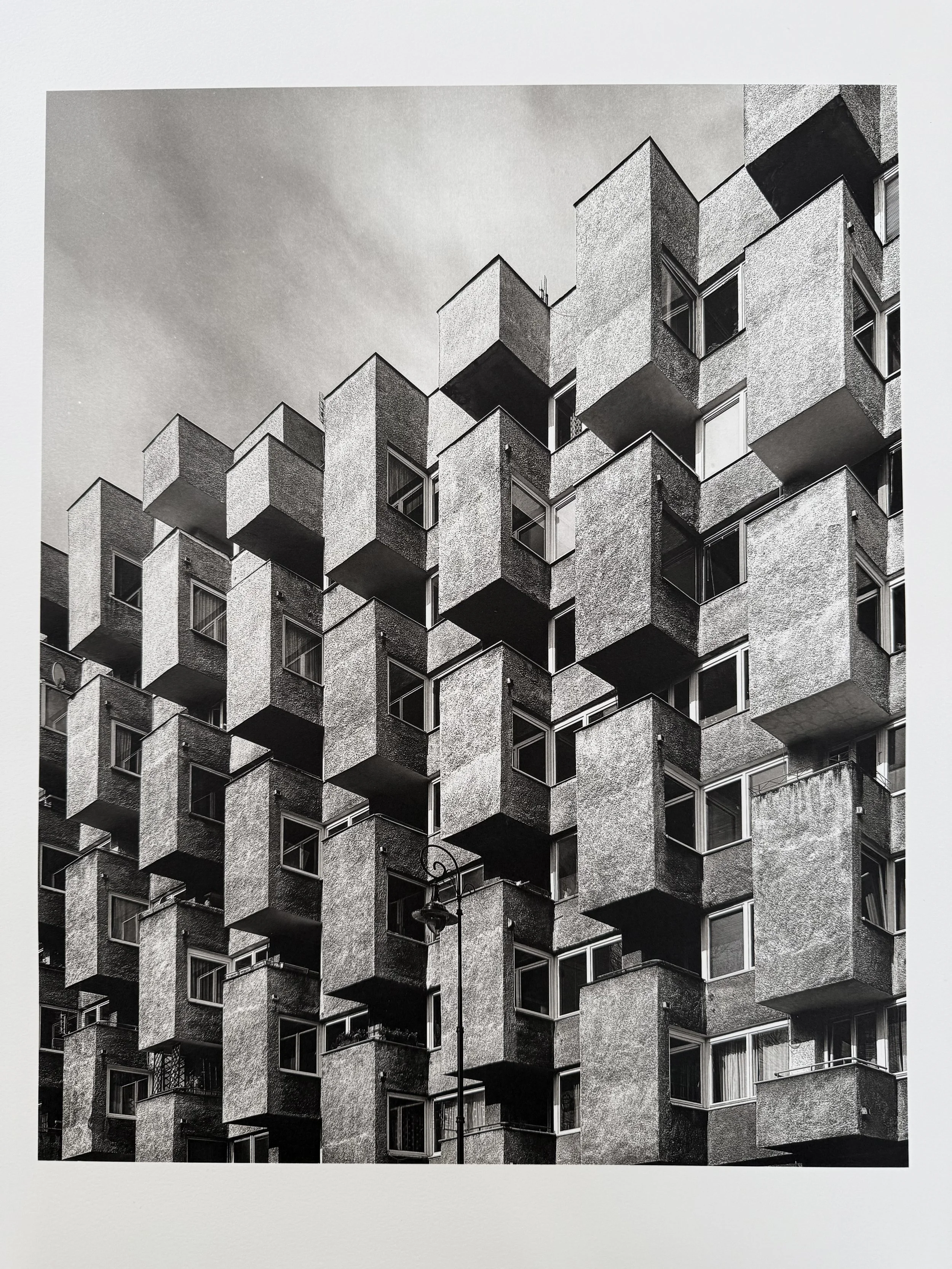
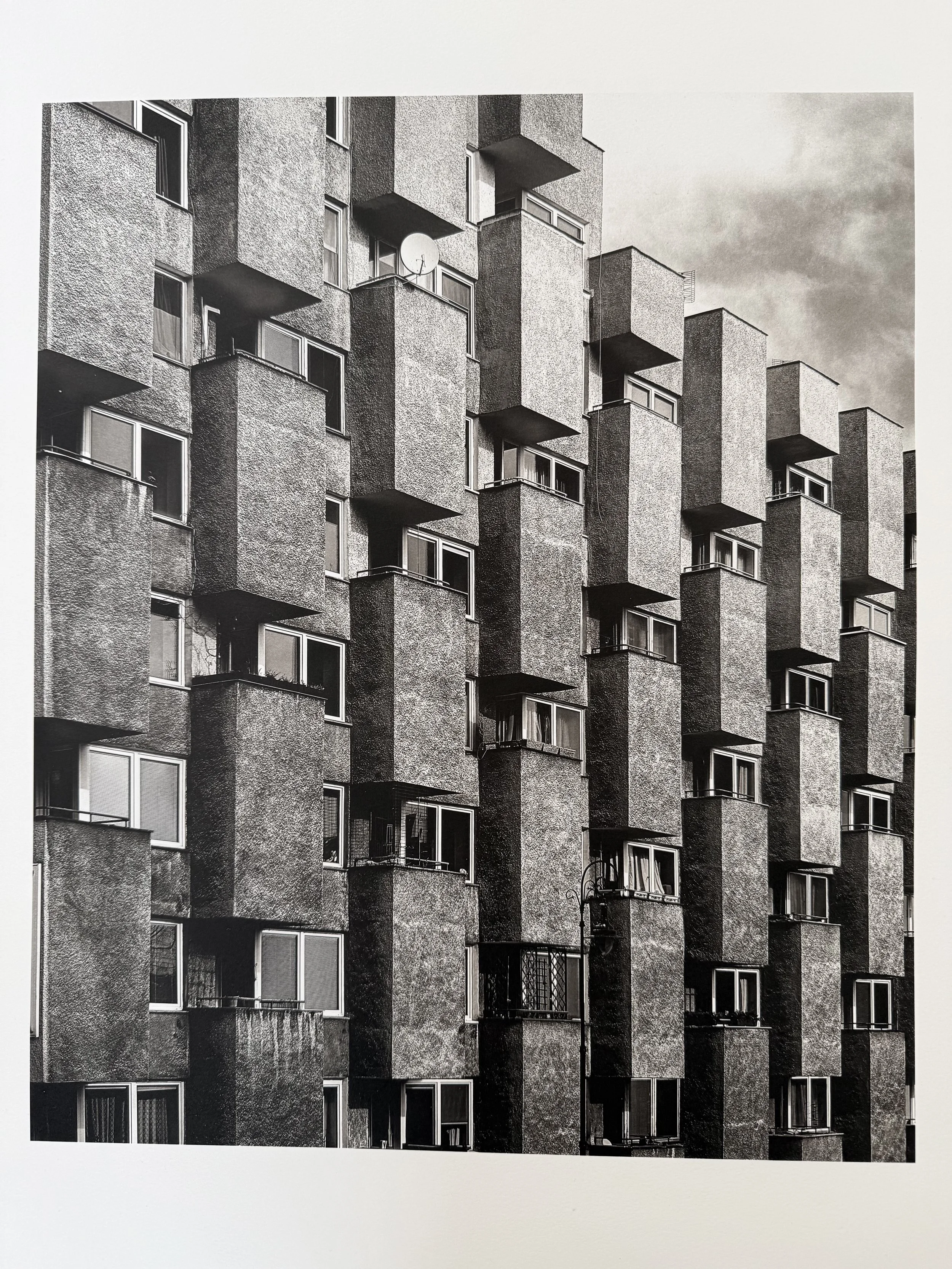
I just returned from Warsaw, Poland. I arrived late, but the work was not finished yet. The films had to be developed immediately. Early in the morning I made the first test prints, and by the evening the two final prints were ready. My curiosity is always pushing me.
Photography is my passion, my pain, my dedication — simply my way of life. What fascinates me again and again is how photography connects me with people, how it opens unexpected doors, and how much it teaches and shapes me along the way. If you truly live it, it becomes something much bigger than taking pictures. I love that! It’s gives energy (and sometimes a lot of frustrations).
This photograph is part of my Brutalism series, which now consists of about 12 plates. I hope to complete the series by April. There is already a request for the full set, and a gallery is considering exhibiting the series at Paris Photo in November — so I better finish it well.
The series began years ago with a building I photographed in Hong Kong, where I was fascinated by the architect’s vision and the power of the structure. Now I have just returned from Poland, standing in front of two new prints and have to decide which one of the two will become part of the series. Any suggestions??
For this photograph I had to ask one apartment to remove their satellite dish and another to take down an old television antenna. Perhaps I am too much of a perfectionist, but those small elements disturbed the rhythm and geometry of the façade.
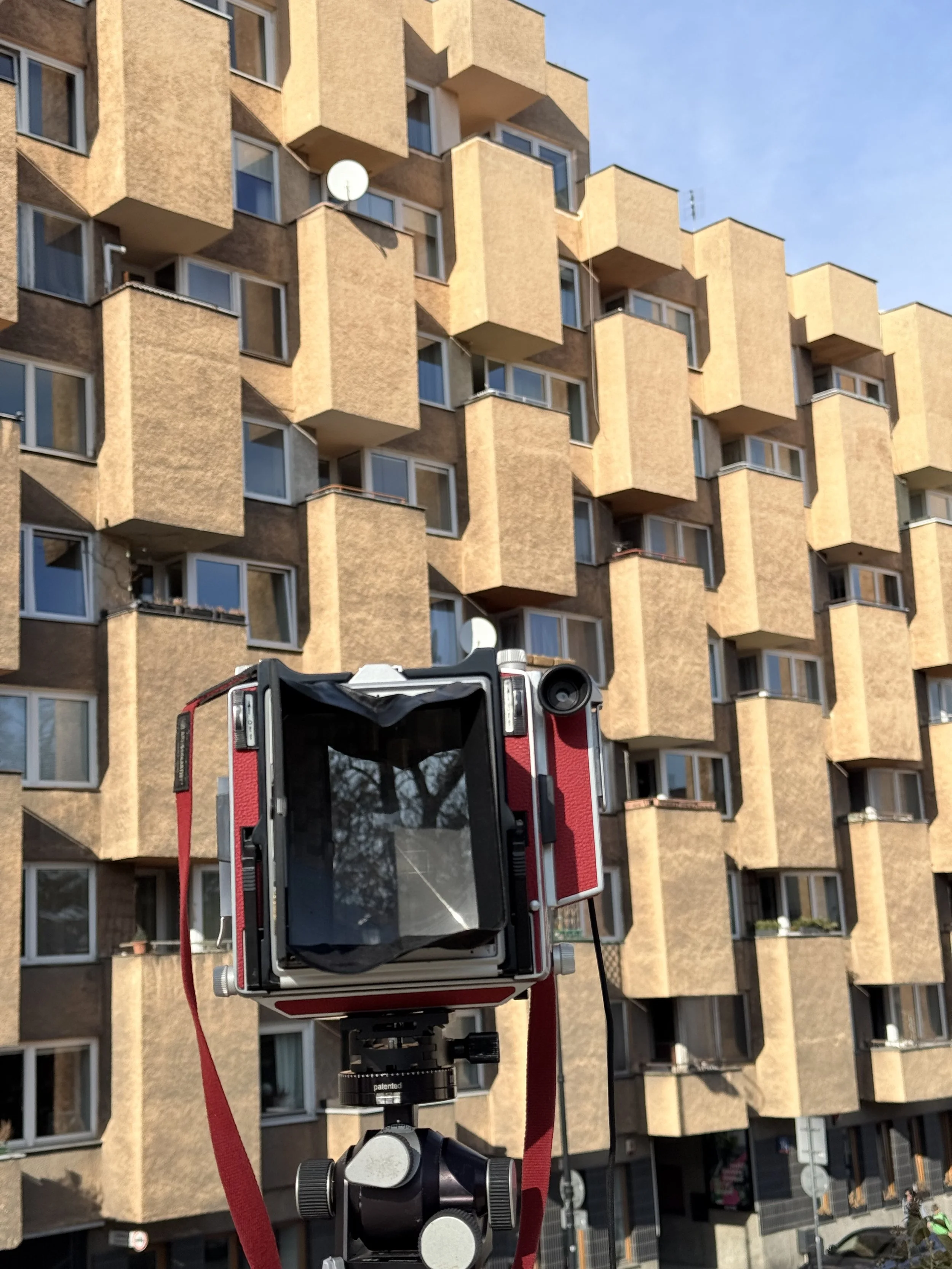
For hours I stood in front of the building with my large format camera setup. Eventually the man who takes care of the building came over and asked what I was doing. I showed him my work on Instagram and some of my other architecture photographs — he became curious and decided to help me. He spoke with the residents and convinced them to clean things up a little.
But the light was still not good. The sky was clear and the shadows too harsh. I wanted soft portraiture light. So I waited for the moment when the sun would disappear behind the surrounding buildings.
While I waited, the housekeeper carefully removed the unused satellite dish and antenna. People began appearing on their balconies, watching the strange man with the large camera standing quietly in front of their building. At one point a teenage girl was sent downstairs to bring me a cup of tea.
After nearly six hours of waiting, the light finally softened. Everything fell into place. I released the shutter and exposed my Fuji Acros 100 sheet films that where expired but deep frozen since many years.
And something else happened during those long hours of looking.
When you spend so much time observing what you want to photograph, something begins to change. With this building, watching the light slowly move across the façade, I began to feel that the building was becoming more than just architecture. I almost felt the presence of the place and started wondering what might have happened inside those walls over the years. It was as if the building slowly revealed itself. The façade was no longer just a façade — it began to feel like a portrait.
I cannot fully explain it, but while writing this now, I realize it.
The elderly housekeeper returned, watching quietly as I made the photograph. When I finished, I thanked him for his help and gave him some money, asking him to go to a restaurant and enjoy a good dinner. I was very thankful for his help.
The next morning I returned. The light was much better, perfect soft overcast portraiture light — and everything was still perfectly arranged. I made the photograph again and discovered another perspective that became the second image.
The housekeeper saw me once more and came over with a smile. He told me he had invited his daughter for dinner the night before and proudly showed me a photo on his phone.
I had my photographs.
And now the journey continues.