On Being an Artist
In ninth grade, my art teacher released me from class.
“You will never understand art. You will never become an artist.”
I answered something equally stupid—that I didn’t want to be poor and lazy anyway. I walked out, and for a long time I never imagined that I would ever call myself an artist.
Back then, art felt distant. My drawings were bad, I didn’t understand what I was supposed to do or far what art was good for, and art history felt abstract and disconnected. And yet, something stayed with me—not the techniques, but the lives of the artists we learned about. The intensity. The seriousness.
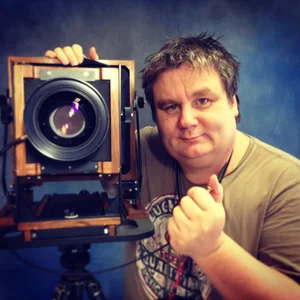
Years later, I began to call myself a photographer. Sometimes a fine art photographer. But “artist”? That word felt uncomfortable. Almost arrogant. I did not earn that and so I did not deserve that title.
Recently, while rewriting my website with a curator friend, she said something very direct:
“If you want to attract collectors and curators, you need to present yourself as a contemporary artist using photography—not just as a photographer.” Otherwise my website would continue to attract only fellow photographers.
That sentence stayed with me.
At first, it felt Weired. But the more I thought about it, the more I realized that the discomfort wasn’t about the word—it was about the weight of it.
So I started asking a simple question:
What actually defines being an artist?
Is it knowing how to paint? To write poems? To use a camera?
Today, it seems almost enough to do something creative in your free time and the title follows. “Artist” has become something we give ourselves.
I grew up in Germany, where titles are not self-assigned. You earn them. You go through training, through tests, through years of work. A title meant something—it reflected a process, not a desire. I always respected that. It builds quality. It builds character. I can call myself to be a photographer because I went trough 3 years of Apprenticeship and received the certificate of being a photographer.
So I looked back.
Historically, being an artist was never casual. It was not something you did—it was something you entered. And once you entered it, it shaped your entire life.
In antiquity, it was mastery. You learned, repeated, failed, refined. Over years. There was no idea that expression alone was enough. Skill was the foundation.
The Renaissance did not simply elevate the artist—it made the role more demanding.
Figures such as Leonardo da Vinci or Michelangelo were no longer only executing with skill; they were expected to think, to observe, to understand the world at a deeper level and translate that into form. They were responsible for new ideas. The artist became responsible not just for making, but for seeing. And that changed everything. Because once the artist becomes an author of ideas, there is no place to hide behind technique alone. Skill is no longer enough. You are now accountable for vision.
And that comes at a cost. This becomes even more visible in the lives of Amedeo Modigliani, Egon Schiele, and Frida Kahlo.
None of them approached art as an activity among others. It was not a pastime, nor a secondary pursuit. It was the axis around which existence itself was organized.
Modigliani did not work “when he felt inspired.” He worked while his body was failing, while his life was unstable, while everything around him suggested he should stop. Schiele did not make drawings to please or to decorate—he pushed into territories that exposed him, socially and personally, to the point of rejection and even imprisonment. Kahlo did not paint to pass time—her work became a structure to endure pain, to translate it, to make it visible with absolute precision.
In all three cases, the work is not separate from the person.
It is the consequence of how they lived.
This is the critical point: historically, being an artist meant accepting a form of total commitment. It defined daily structure, priorities, relationships, and often demanded sacrifice. It required endurance, not just inspiration.
Historically, being an artist meant accepting that the work takes precedence. It defines how you structure your day, what you sacrifice, what you pay attention to, what you are willing to endure. It is not driven by motivation, but by necessity.
And that necessity has a price.
Time. Stability. Comfort. Often relationships. Sometimes even acceptance.
That is the part that has largely disappeared today.
We live in a time where creating is easy, accessible, immediate. And that is not the problem. The problem is that the cost has been removed, but the title remains.
Creative activity has become enough to justify calling oneself an artist.
But historically, the sequence was the opposite.
You did not begin with the title. You arrived at it—if at all—through years of commitment that shaped your life to a point where the work was no longer optional.
Today, one can make images occasionally, write from time to time, paint when there is space—and still claim the same word.
But if nothing has to be given up, if nothing is at stake,
if the work does not structure your life — then something essential is missing.
Because being an artist was never defined by what you do in your free time.
It was defined by what you are willing to give your life to.
And maybe this is where it becomes uncomfortable.
I see many people today who carry something of an artist within them—but stop short of living it. Not because they lack ability, but because they understand, somewhere deep down, what it would require.
To take it seriously means stepping into uncertainty. It means giving up the idea that everything can stay safe, predictable, and controlled.
We are told today that we can have it all.
Security. Comfort. Freedom. Recognition. A normal life.
But an artistic life has never worked that way.
It asks for focus.
It asks for decisions.
And often, it asks you to give something up.
Not everyone is willing to do that. And that is fine.
But a society without artists loses something essential.
Artists are not there to decorate the world.
They are there to question it, to reveal it, to shift how we see. To come up with new ideas.
And in times like these, that matters.
So maybe the question is not whether you call yourself an artist.
Maybe the real question is:
Are you willing to live like one?