The power of images and our need for beauty
I just read the book Aesthetics, Volume I by Dietrich von Hildebrand. Not an easy book to read, but it is part of my own search for understanding beauty, and it was recommended to me by a curator friend of mine.
For me, what Dietrich von Hildebrand writes about beauty feels very close to the reason why I create photographs in the first place. Not because I approach photography philosophically when I work, but because many of the things he describes are exactly what I instinctively search for in images and in the experience of making them.
We live in a time where images became almost endless. Most are consumed within seconds and forgotten just as quickly. Everything became faster, louder, brighter, more extreme. And often I feel many images are no longer trying to reveal something real, but simply trying to trigger an immediate reaction. They want attention. They want impact. But very often they leave nothing behind.
This is where I connect deeply with Hildebrand’s distinction between true beauty and kitsch.
Kitsch attempts to force emotional reaction without truth or depth. Genuine beauty, by contrast, does not manipulate. It reveals. It leaves space for silence, ambiguity, and contemplation. This distinction becomes particularly important in artistic practices that seek emotional honesty rather than spectacle. Kitsch pushes sentimentality onto the viewer instead of allowing something deeper to emerge naturally. It often exaggerates, decorates, and over-explains. It wants to impress immediately. But true beauty works differently. It has silence in it. Mystery. Space. It does not scream. It reveals.
I think this is one of the reasons why I was always drawn to older photographic processes and to a slower way of working. A handmade platinum print does not fight for attention. It invites contemplation. The surface is soft and quiet. The tones are deep but never aggressive. The image appears almost like a memory or presence inside the paper itself. To me, this creates an emotional depth that many digital images completely lose.
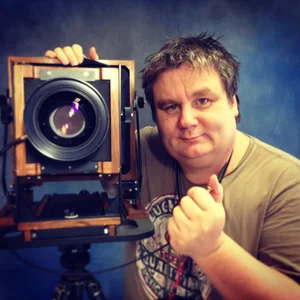
And I think the process itself changes the image. When working with a large format camera, film, and handmade printing techniques, photography becomes slower and more intentional. You cannot endlessly shoot without thinking. You wait. You observe. You prepare carefully. Every exposure matters. Every print carries time, concentration, failure, patience, and physical involvement.
I believe viewers can feel that, even when they cannot explain why.
Hildebrand writes that beauty asks us not to consume, but to contemplate. This feels very important to me. I do not want my work to function like visual noise that disappears after a few seconds. I want the viewer to stop. To remain with the image for a moment. To slowly discover details, emotions, structures, or even contradictions inside it.
This is also why I often isolate my subjects — jellyfish, plants, flowers, architecture, portraits — from distraction and context. I want them to become more than objects. I want them to gain presence. Sometimes almost like portraits of another form of life. The goal is not documentation. It is revelation.
And maybe this is also why materiality matters so much to me. In a world where images increasingly exist only as light on screens, the physical print becomes important again. A platinum print is not only an image. It is an object carrying touch, craftsmanship, time, and permanence. It resists the temporary nature of digital culture.
I think real beauty always contains depth. It does not only show something attractive. It reveals vulnerability, mystery, fragility, longing, sometimes even sadness. The works that truly stay with us are often quiet works. They do not force us emotionally. They allow us to enter them slowly.
This is probably what I search for most in photography: images that do not simply look beautiful, but images that possess presence, silence, and emotional truth.