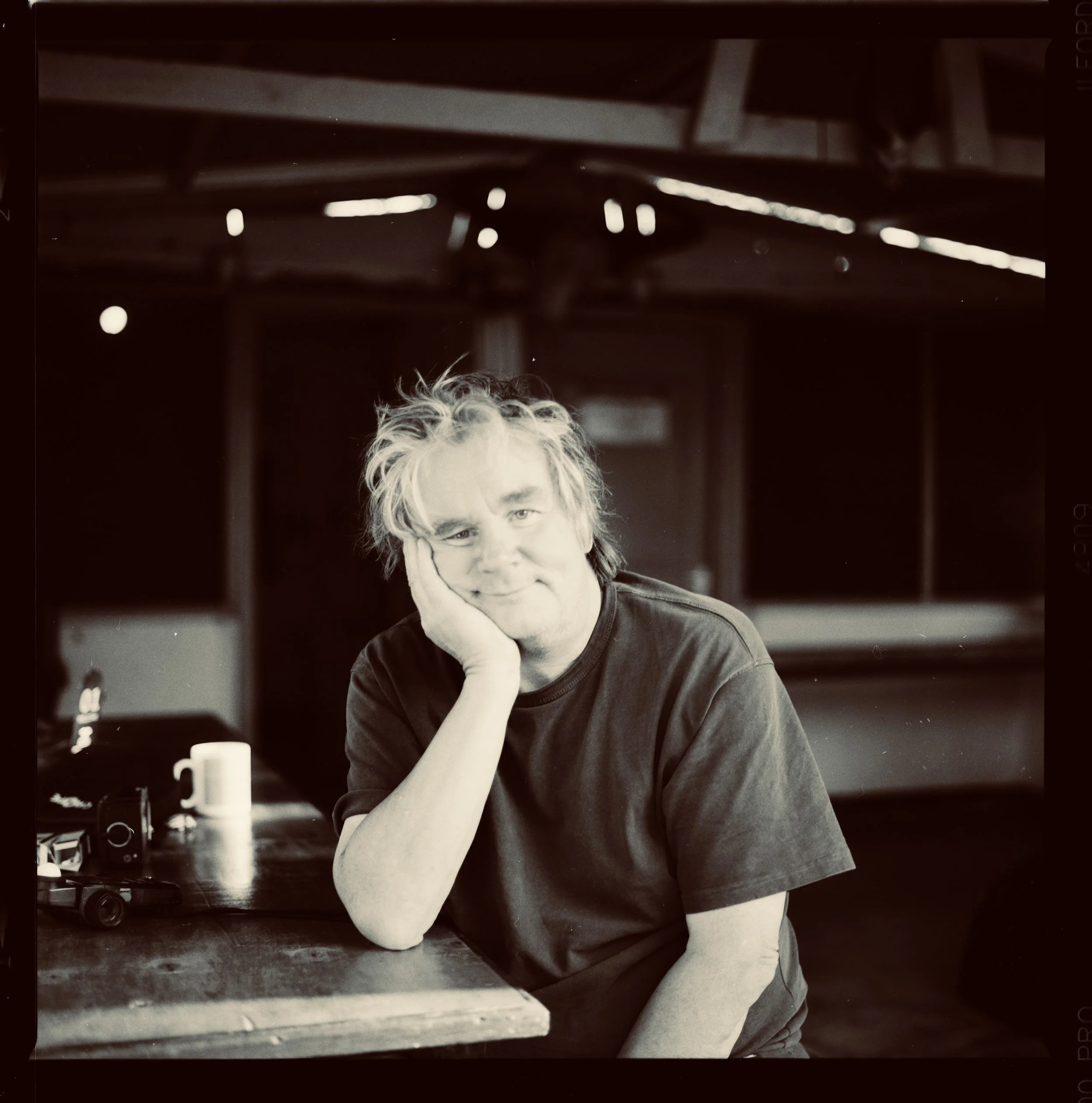
PHOTOGRAPHY IS NOT SIMPLY WHAT I DO. IT IS MY WAY OF LIFE—MY WAY OF PARTICIPATING IN CREATION.
I believe we are here to create.
When I stand at the shore of an ocean and look toward the horizon, I see infinity. When I look into the sky, I see it again. We live in a world of extraordinary possibility, yet we spend much of our lives accepting limitations—often without questioning who defined them or whether they are really there.
For me, creation begins with the belief that something that does not yet exist can exist.
If we accept only what is already known, reasonable and possible, we can only repeat what has already been done. To create something genuinely new, we have to be willing to question those boundaries.
Creation begins when “impossible” becomes a question rather than an answer.
This does not mean limitations aren’t real. But I want to discover them myself rather than inherit them from somebody else’s experience. I am currently working on something I have been told is impossible: creating a platinum print 5.6 meters wide. I don’t yet know whether I will succeed. There is no established method waiting for me, and that uncertainty is precisely the point. Instead of asking Can this be done?, I ask What do I need to discover, change or invent to make it possible?
Curiosity, uncertainty, experimentation, failure and discovery are fundamental to my work.
I encounter this same sense of creation everywhere in the world around me. There is an almost unreasonable abundance of individuality, complexity and beauty. No two people are identical. No two flowers are exactly alike. And the closer I look, the more extraordinary it becomes.
While working on Life on Earth, I spent countless hours looking at phytoplankton through a microscope. I discovered an entire world invisible to the human eye—tiny organisms of astonishing complexity and beauty. What affected me most was that this beauty existed without needing to be seen. Entire masterpieces hidden in a drop of water.
I don’t believe we are here merely to consume what already exists. We are capable of adding something to it.
We can imagine, invent, transform and bring something into the world that wasn’t there before. The more honestly I participate in that process, the more alive I feel—and the more purpose I find in my own life.
Photography is my language for doing this.
My work begins with curiosity. I photograph what I want to understand. And in a way, I turn almost everything into a portrait.
Whether it is a human being, a flower, an animal or a microscopic organism, I approach the subject as an individual presence. I often remove it from its familiar surroundings and reduce the image to what I consider essential. I am less interested in explaining what something is than in creating an encounter with it.
In my portraits of people, the idea of mirror and window is fundamental. A portrait begins as a window through which we encounter another human being. But if we remain with it long enough, that window can become a mirror. How we see another person inevitably reveals something about ourselves—our assumptions, desires, fears, prejudices and ideas of beauty.
I work in projects and series because I don’t want to collect photographs. I want to investigate.
One photograph can show. A body of work can question.
A project gives me time to return, fail, reconsider and discover. Often I don’t fully understand what I am looking for when I begin. I consider that essential. If I already knew the answer, I would merely be illustrating something I already understood.
Truthfulness is non-negotiable.
I don’t believe relevance can be manufactured. The work has to begin with something genuine—a real encounter, question, emotion or experience. But experience alone does not make art. Something personal has to be transformed into something that can exist beyond me.
I want my work to be relevant to another person and to the time and society in which we live. Not by following what is fashionable or expected, but by searching for something personal that is truthful enough to become universal.
Taking the photograph, however, is still only the beginning.
The print is not a reproduction of the photograph. The print is the artwork.
Every print I make is an interpretation. Through material, density, tonality, contrast, surface and imperfection, I continue creating the image. When I print, I return to the original encounter—not only to what I saw, but to what I felt.
The negative remembers the light. The print carries my interpretation of that memory.
This is why the physical object is essential to me. I believe an artwork can become charged with the time, decisions, touch and emotional energy invested in creating it. An image on a screen can show what I photographed. The physical print can carry something of my relationship to what I photographed.
Beauty is important to me. But beauty alone is not enough.
Beauty can make us stop. It can create curiosity and make us look longer. But then the work has to take us somewhere.
I want to create something truthful from an encounter. Something that did not exist before. Something that carries my experience but no longer belongs only to me. Something that can become relevant to another person, to our time, and perhaps survive both the moment in which it was made and the person who made it.
Photography is not simply what I do. It is my way of life—my way of participating in creation.