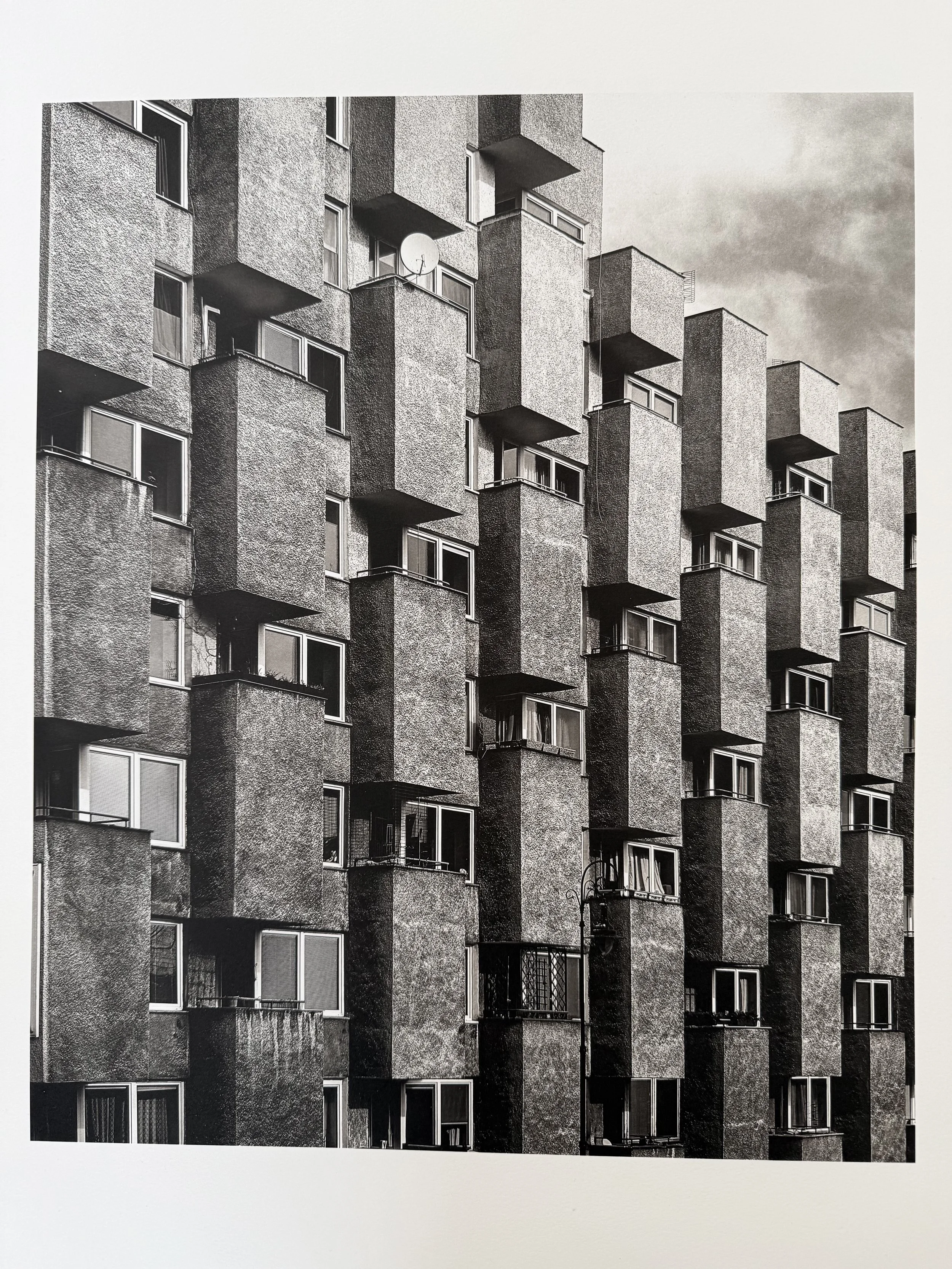
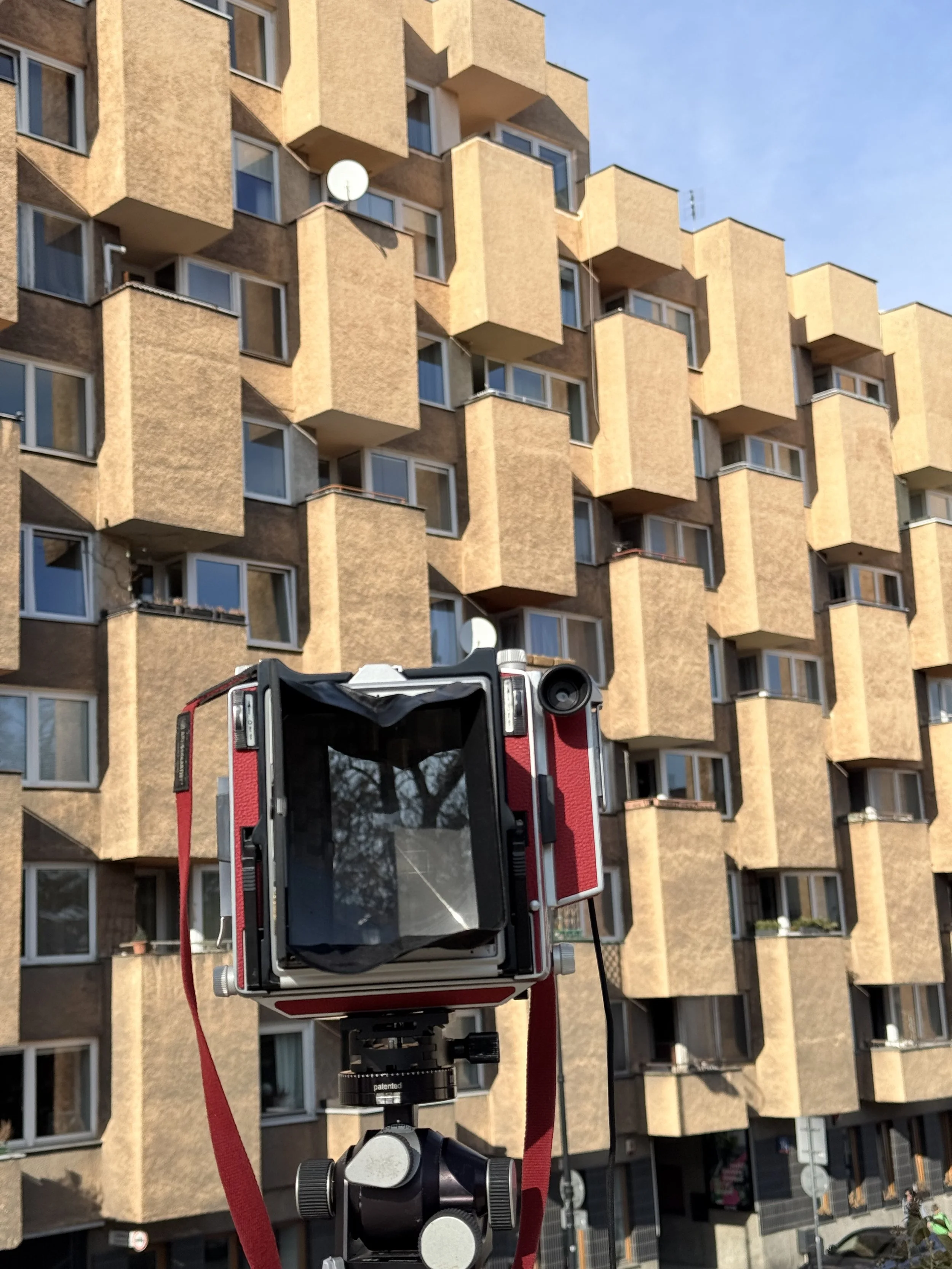
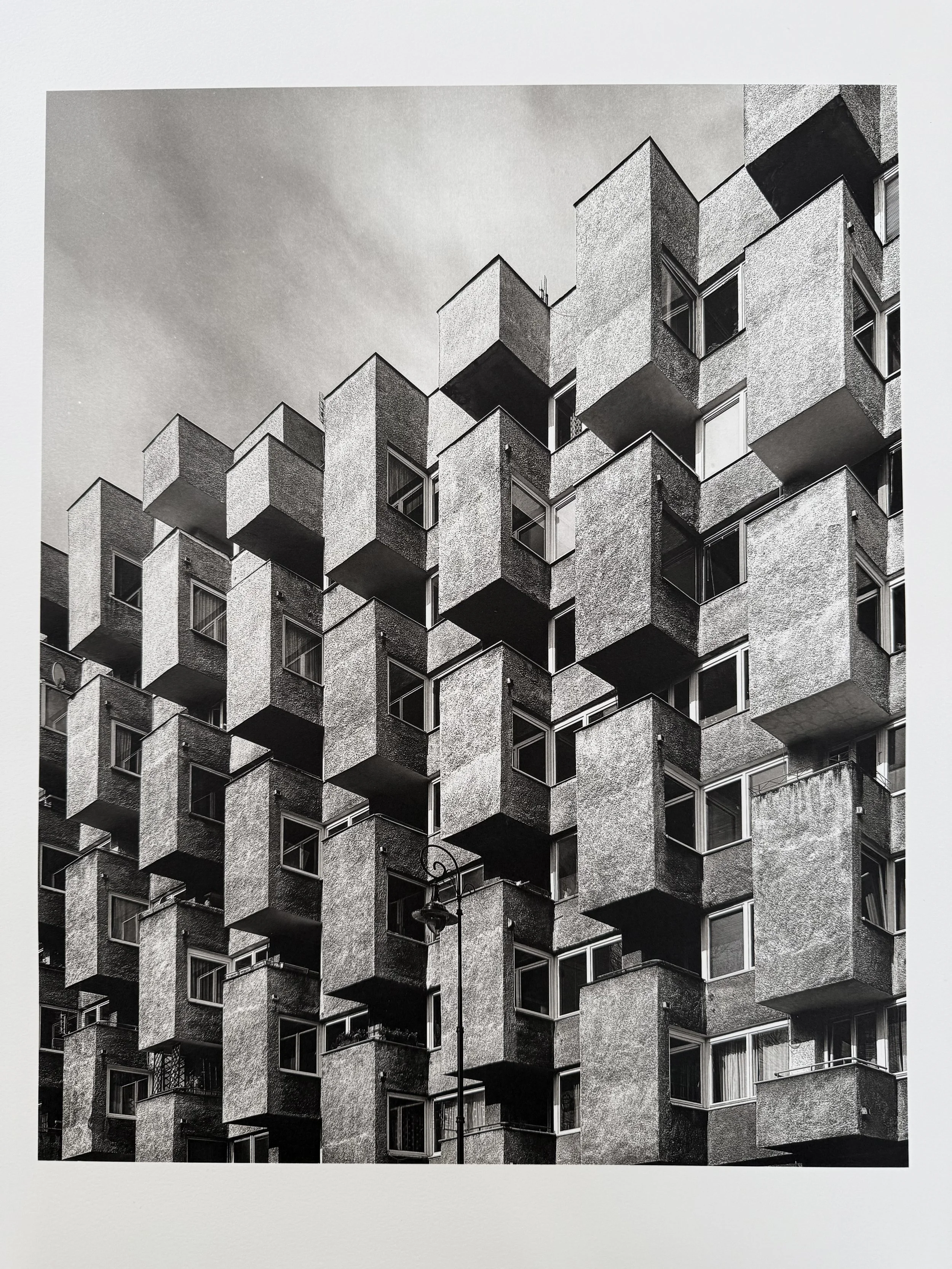
Working on my Brutalism Architecture series in Warsaw...

I just returned from Warsaw, Poland. I arrived late, but the work was not finished yet. The films had to be developed immediately. Early in the morning I made the first test prints, and by the evening the two final prints were ready. My curiosity is always pushing me.

Photography is my passion, my pain, my dedication — simply my way of life. What fascinates me again and again is how photography connects me with people, how it opens unexpected doors, and how much it teaches and shapes me along the way. If you truly live it, it becomes something much bigger than taking pictures. I love that! It’s gives energy (and sometimes a lot of frustrations).

This photograph is part of my Brutalism series, which now consists of about 12 plates. I hope to complete the series by April. There is already a request for the full set, and a gallery is considering exhibiting the series at Paris Photo in November — so I better finish it well.

The series began years ago with a building I photographed in Hong Kong, where I was fascinated by the architect’s vision and the power of the structure. Now I have just returned from Poland, standing in front of two new prints and have to decide which one of the two will become part of the series. Any suggestions??

For this photograph I had to ask one apartment to remove their satellite dish and another to take down an old television antenna. Perhaps I am too much of a perfectionist, but those small elements disturbed the rhythm and geometry of the façade.

For hours I stood in front of the building with my large format camera setup. Eventually the man who takes care of the building came over and asked what I was doing. I showed him my work on Instagram and some of my other architecture photographs — he became curious and decided to help me. He spoke with the residents and convinced them to clean things up a little.

But the light was still not good. The sky was clear and the shadows too harsh. I wanted soft portraiture light. So I waited for the moment when the sun would disappear behind the surrounding buildings.

While I waited, the housekeeper carefully removed the unused satellite dish and antenna. People began appearing on their balconies, watching the strange man with the large camera standing quietly in front of their building. At one point a teenage girl was sent downstairs to bring me a cup of tea.

After nearly six hours of waiting, the light finally softened. Everything fell into place. I released the shutter and exposed my Fuji Acros 100 sheet films that where expired but deep frozen since many years.

And something else happened during those long hours of looking.

When you spend so much time observing what you want to photograph, something begins to change. With this building, watching the light slowly move across the façade, I began to feel that the building was becoming more than just architecture. I almost felt the presence of the place and started wondering what might have happened inside those walls over the years. It was as if the building slowly revealed itself. The façade was no longer just a façade — it began to feel like a portrait.

I cannot fully explain it, but while writing this now, I realize it.

The elderly housekeeper returned, watching quietly as I made the photograph. When I finished, I thanked him for his help and gave him some money, asking him to go to a restaurant and enjoy a good dinner. I was very thankful for his help.

The next morning I returned. The light was much better, perfect soft overcast portraiture light — and everything was still perfectly arranged. I made the photograph again and discovered another perspective that became the second image.

The housekeeper saw me once more and came over with a smile. He told me he had invited his daughter for dinner the night before and proudly showed me a photo on his phone.

I had my photographs.

And now the journey continues.
Long hours alone in the car give you time to think. I found myself thinking about photography. About galleries. About artists. And about what we are all chasing

I’ve just returned from a long 3,500-kilometer journey through Italy. Five days on the road, sleeping little, driving from one location to another, always with my large-format camera in the trunk. Brutalism. Cactus. In total I exposed 150 sheets of film.

Long hours alone in the car give you time to think and process. I need those times in order to find out what I want and what direction to go. I am very intuitive in what I am doing but also carefully plan my life. I build my life intentionally.

I found myself thinking about photography, about my way of seeing, and also about how thankful and privileged I feel to work with galleries that truly believe in my work. I have a “cloud of collectors” that mean a lot to me.

At the same time, I was thinking about many of my friends—artists and photographers—striving to enter the art world, hoping to find a gallery that will represent them. Again, I feel very grateful that somehow I made it—unexpectedly, perhaps. I was never really chasing it. Somehow I was got discovered by galleries.

Just ten days ago I was in Amsterdam, standing in museums in front of paintings by Van Gogh, Modigliani, Cézanne, Frida Kahlo and many other modern masters. During those many hours on the road I had time to reflect on what we are actually chasing today.

We often dream of the lives of Picasso, Modigliani, and Cézanne—modern masters who seemed to breathe art. In their time, and partly through them, the gallery world in Paris blossomed. By the 1930s one street alone boasted more than twenty galleries; Paris likely had dozens, perhaps over a hundred. In many ways the modern system of galleries and collectors was born in that era. Their success—and the prices their works achieve today—have become a benchmark we still chase.

But when we speak about their dedication or their obsession, we often romanticize it. What it really meant was sacrifice. They gave up stability, security, and comfort. Many lived in poverty. Relationships suffered. Their entire life revolved around one thing: making art. There was no safety net, no backup plan, no parallel career. Art was not something they did—it was the only thing they could do.

Today we live in a world of 8.2 billion people. Paris alone now has more than 2,000 galleries, yet the number is again shrinking (like everywhere in the world). At the same time, the number of artists seems to be exploding. We compare ourselves to those heroes, yet the ecosystem is completely different.

The difference, I believe, is not only competition—it is commitment. Today many people call themselves artists, but for many it remains a hobby, something that fits into the spaces between other ambitions. The word “artist” has become easy to claim. But the life behind it—the willingness to sacrifice everything for the work—is much rarer.

At the same time, digital visibility has changed the game. In a world where billions of people can see what we do, the temptation is strong to copy what already works. Instead of creating from necessity, we begin reproducing what is successful.

And so I realize something: the illusion is not their fame. The illusion is believing we are playing the same game.

Perhaps success today is not about reaching the prices of those masters or repeating their stories. Perhaps it is about rediscovering the same inner necessity they had—the quiet but unstoppable force that makes someone create, not because it is profitable, fashionable, or visible, but because they simply cannot do otherwise.

To create because we must.

And I believe that work created from this place will always find its way into the world of art—and eventually into galleries.

EXHIBITION IN OSLO AT WILLAS CONTEMPORAR

THE TRIBES OF OUR GENERATION

19.01 - 04.03

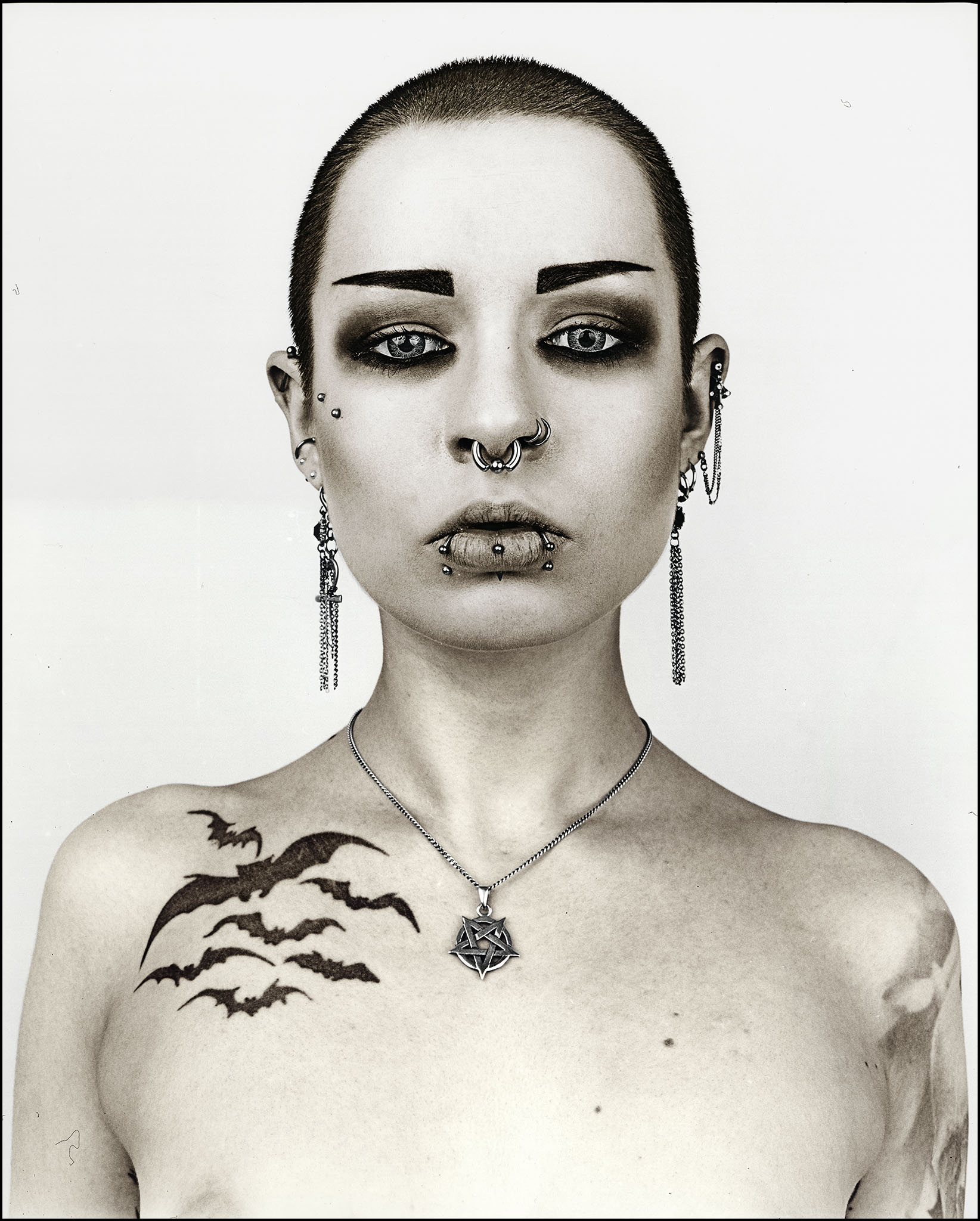
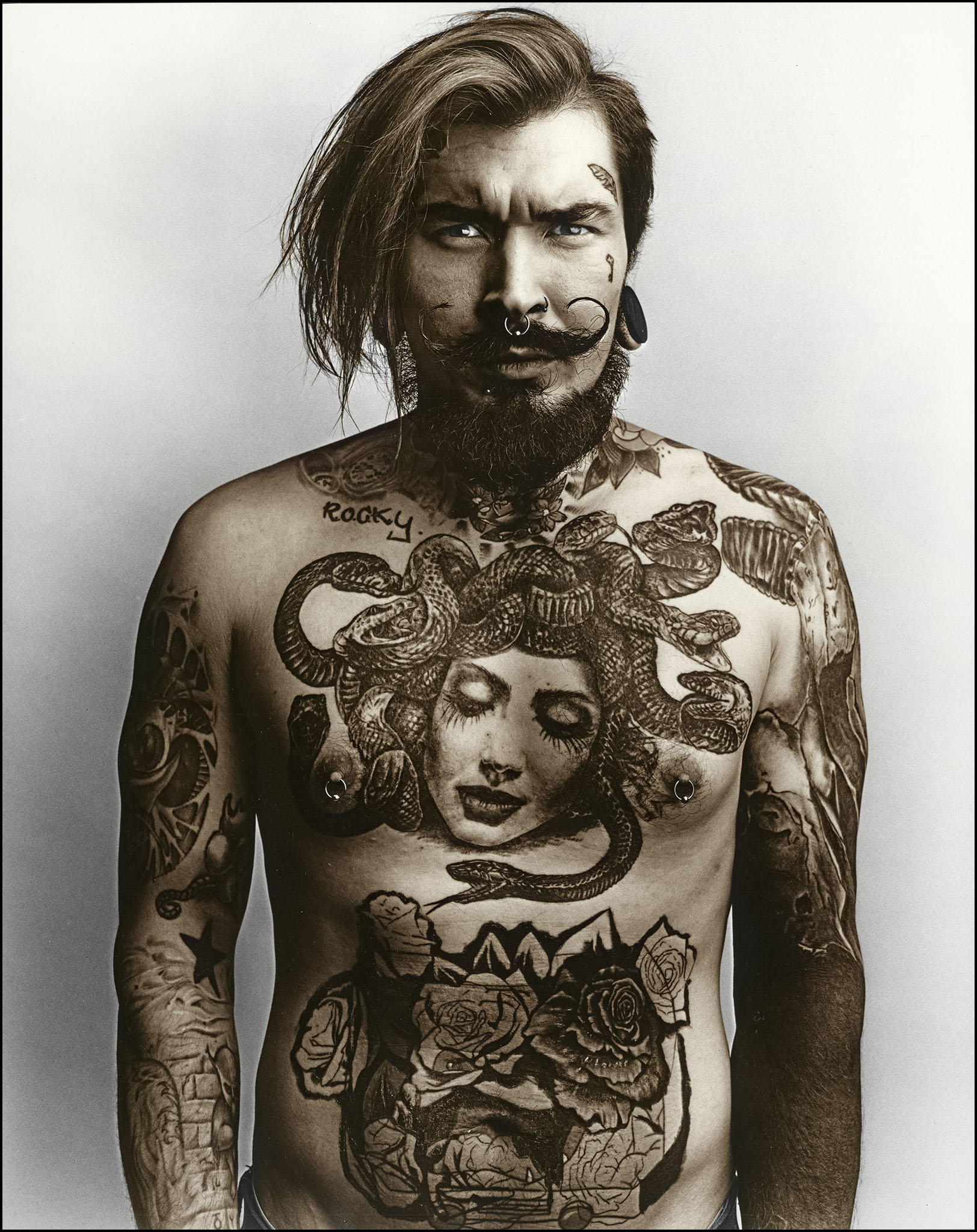
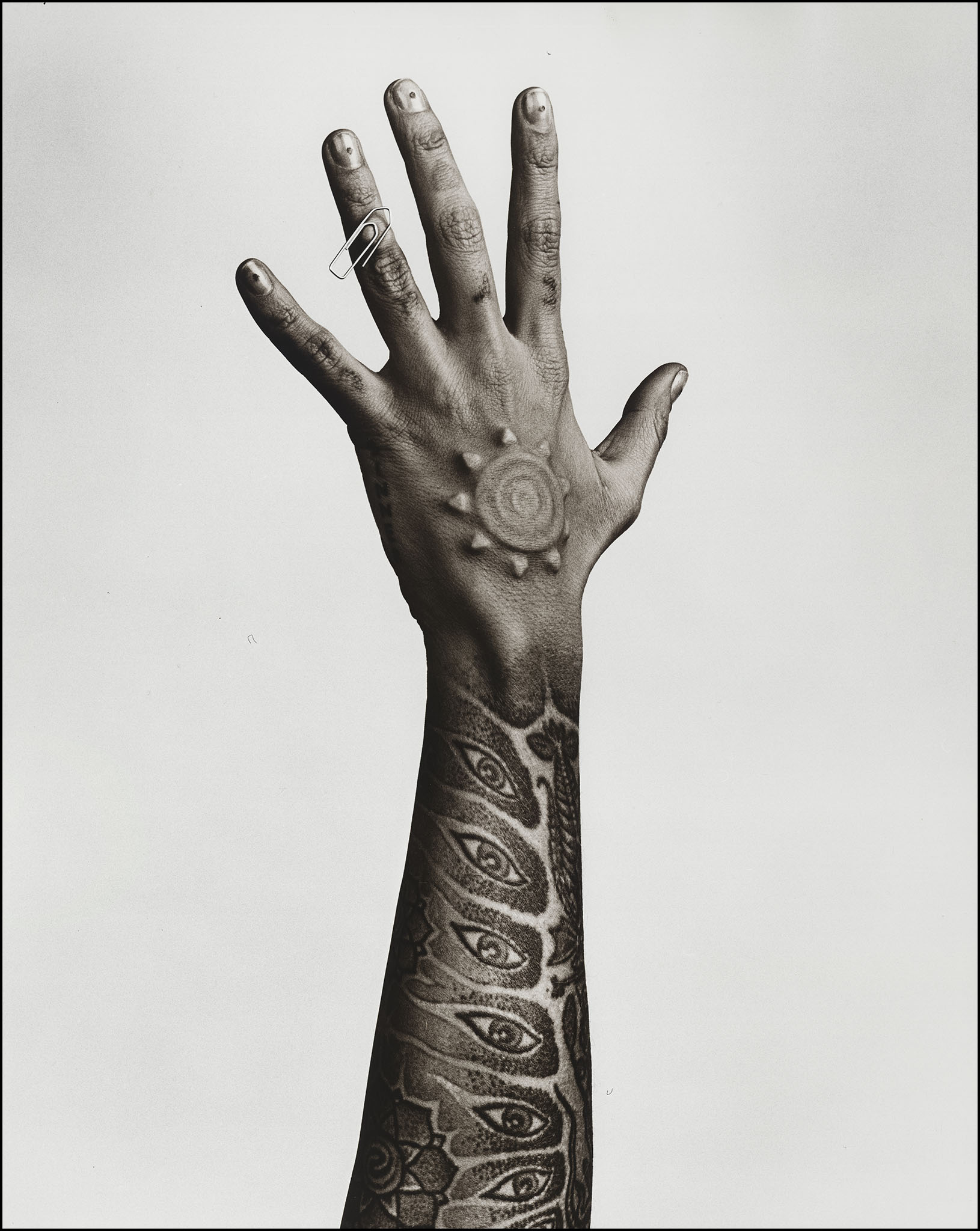
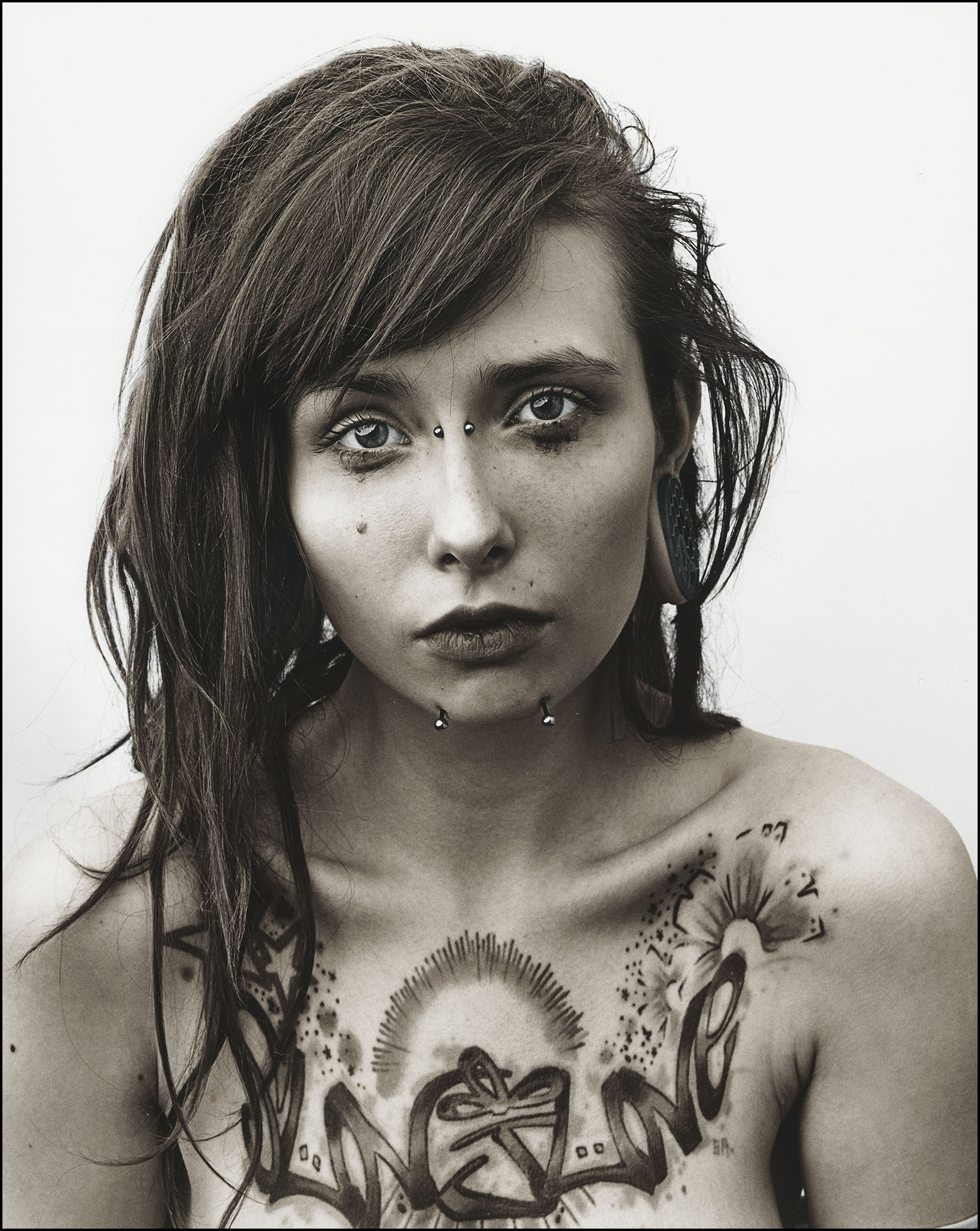
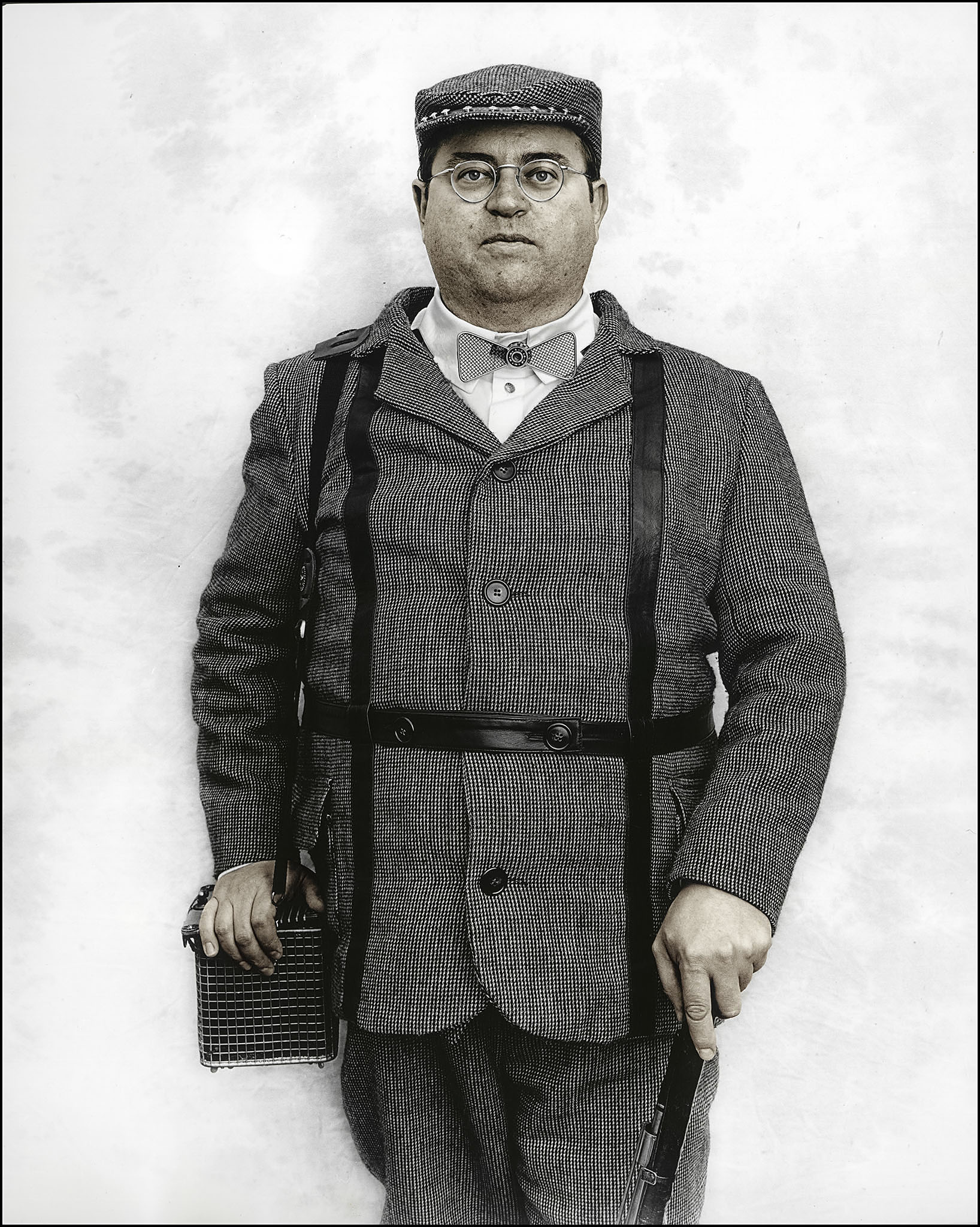
Ever since the origins of humanity, geography has determined which culture, nation or ethnicity we belong to. Globalisation changes this, leaving many of us with unresolved questions. How do we become part of a culture? What are the mechanisms that determine the tribe we belong to - and how we choose to present ourselves?

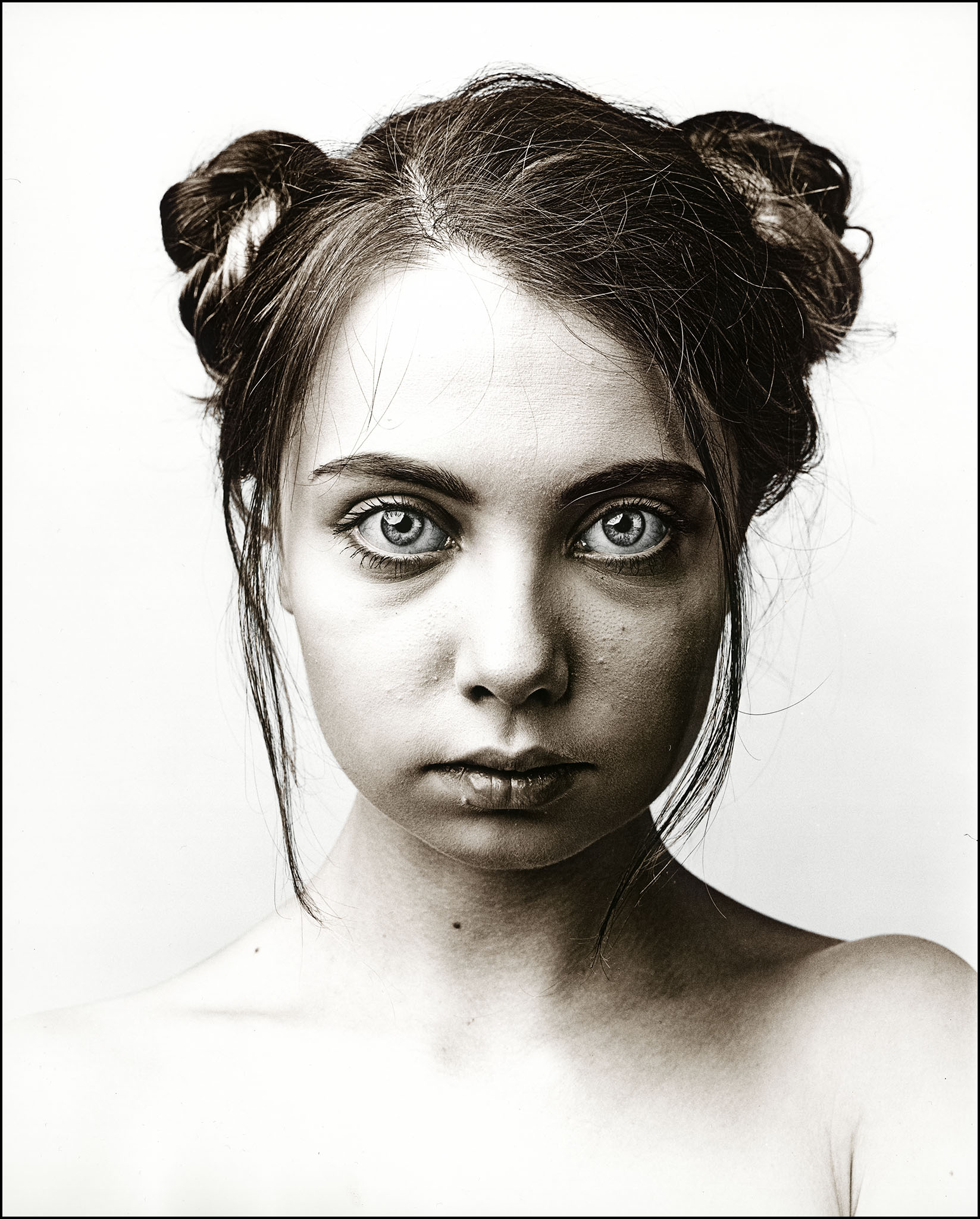
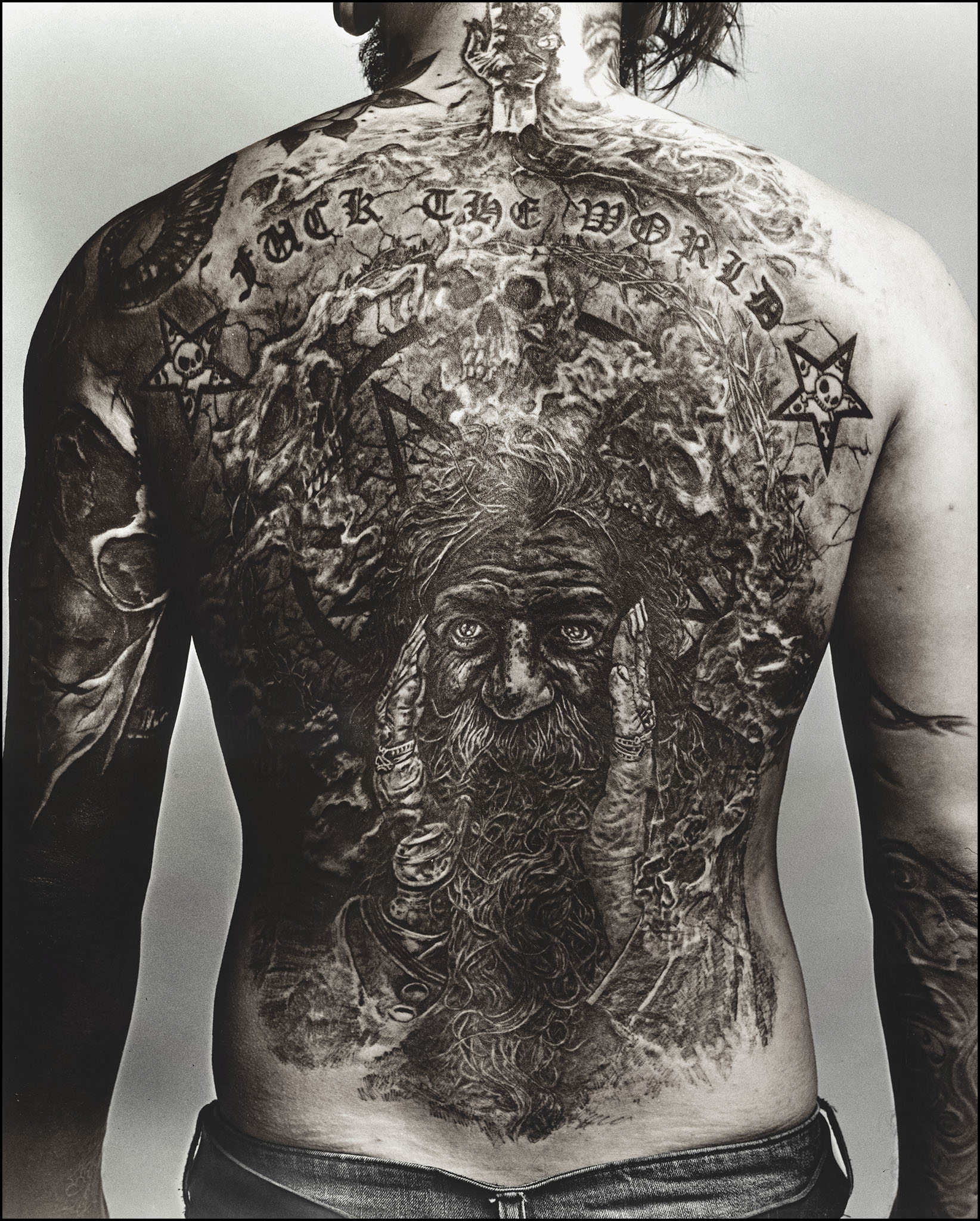
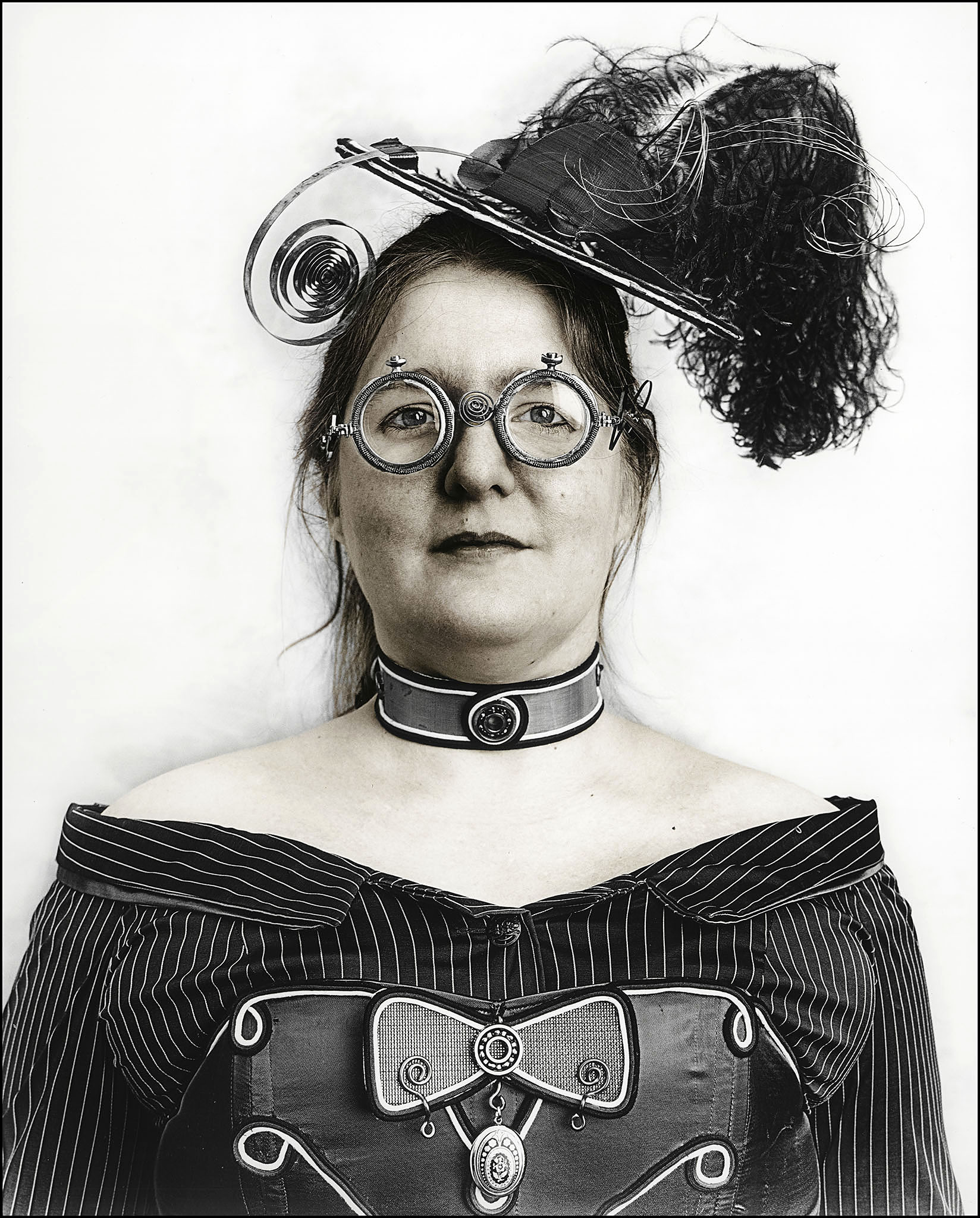
Jan C. Schlegel is internationally recognised for his many classic and timeless portraits of indigenous people from around the globe. He recently made a fascinating discovery. He found aesthetic elements and symbols he recognised from his many travels within our own culture. Schlegel started making contact with people from different subcultures that interested him, and invited them to his studio. His subject matter in Tribes of Our Generation are people who act as role models in their subcultures, people who are linked together on instagram and other social media.

Jan C. Schlegel [1965] was born and raised in Schwartzwald in Germany. He discovered photography at an early age. Schlegel works with a large format camera on traditional film. His images are not digitally edited - but magnified in a traditional darkroom and partially toned using an intricate technique that makes each photograph unique.

WILLAS contemporary is the first gallery to present 'Tribes of Our Generation' by Jan C. Schlegel. We invited the Norwegian Art Critic Lars Elton to write an essay on Schlegels work. Tribes of Our Generation can be a gateway to increased understanding and respect for subcultures in our own society.

18th of January - Artist talk and Panel Discussion at Cinemateket.
19th of January - Opening Tribes of our Generation at WILLAS contemporary- the artist will be present.
20th - 25th of February - Jan C. Schlegel will welcome models to his studio in Oslo.

WILLAS contemporary
Tordenskioldsgate 7
0160 Oslo
Opening hours during exhibitions:
Tuesday - Sunday 12am - 5pm and by appointment
Tel  +47 9133 2343

When Being a Good Photographer Isn’t Enough

I’ve met a lot of bitter photographers over the years, especially as high-end cameras have become cheaper and more accessible. They complain that Photographer A gets more work than Photographer B even though Photographer B’s work is clearly better; or that Photographer C doesn’t get any work even though their work is the best of the three (Side Note: often times the photographer complaining IS Photographer C).

Read More