A little bit of “My Story”
I have an 11-hour stopover in Istanbul and feel a bit stranded. It’s a good time to reflect and put some thoughts in writing.
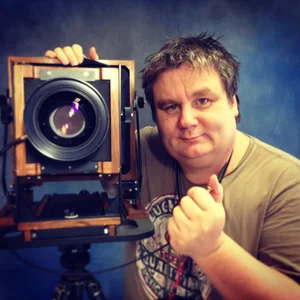
I was interviewed by a newspaper, and one of the questions was, “What makes a photograph art?” The journalist asked about the type of camera used, whether it was black and white, and continued, not understanding why someone would use such a difficult camera instead of a phone.
I also have people contacting me, asking what they need to do to be represented by an art gallery or to start selling their pictures. Some even come to my home, showing me their portfolios and asking if I think their work is good enough for the art market.
The last few days were turbulent, and now I have time to think about that. I’m trying to put my thoughts into this small article in the hope that it will help someone. It certainly helps me understand myself better. I haven’t studied this subject, so I can only write from my own experience and observations.
First, the art market is hard to understand, and it’s constantly changing. The number of galleries with a physical presence is shrinking, while the number of people trying to break into the art market is growing dramaticly. NFTs were a hype that, in my opinion, attracted many people who just wanted to make something to be part of the huge amount of money that people paid for a JPG. Now, we’re talking about AI-generated photography trying to be recognized as art. What I see in all of this is that it’s about money—creating something to sell. It’s a product. But again, this is just my personal opinion.
I just sold a silver gelatin print from my Essence series while sitting at the airport. I work with amazing galleries that represent my work. They believe in it and take significant financial risks by bringing my pictures to art fairs. This year, my works are being shown at fairs in NYC, London, Paris, Milan, and Barcelona. I have collectors all over the world, with my pictures hanging on their walls. Just thinking about it humbles me.
But how did this happen? I almost never do public relations or advertising—only use Instagram to share my life and showcase my portfolio, and a little bit on my Telegram channel and have a website. So, it’s certainly not public relations work. I also don’t contact galleries much.
I once went to New York with my portfolio under my arm, approaching galleries. It was a devastating experience, and I’ll never do it again.
So, what is it? What got me into the art world somehow? Why have my pictures been exhibited at Paris Photo for 15 years in a row? What was it?
My first series was my Essence series (you can find it at my website)
I created this series just for myself, not with any audience in mind. I traveled about 120 to 150 times to different countries in Africa and Asia, with a deep fascination for the people in various ethnic groups. I spent a lot of time there, investing my life in building different social projects, from orphanages and wells to rescue programs for trafficked girls. In the beginning, I didn’t even have a camera with me, but the desire grew to take pictures of these amazing people in their dignity and beauty. I worked hard to improve my photography, but I only took the pictures for myself. I developed them in my darkroom at home, framed them, and the only person who saw them for a long time was me and my close friends. It never even occurred to me to show them; instead, they were my personal treasures. With every picture I took, my passion for photography grew, and I discovered it as my personal language.
I only calculated recently how much money I invested in that series, and it was close to €350,000. I have no idea how I was able to finance that.
Close friends who saw the framed pictures in my living room, leaning against the wall, looked through them and gave me a hard time because I never really showed them. As a birthday gift, they organized for me to have a booth at an art fair in Berlin (called Berlin Foto), where photographers could exhibit their work directly. They paid for the booth, set it up, and all I needed to do was be there. It was a bit crazy to see my pictures on the wall, presented to the public. People asked how much they would cost, and I said €250, including a frame with museum glass. Yes, I sold a lot, but I made no money. I remember how surprised I was that someone would want my pictures on their wall at home.
That fair was also where I met Franz Van der Grinten, a gallerist from Cologne. He loved my works! He looked at them for a long time and said I should immediately raise the price to €1,250 or more, otherwise, he would buy all of them. He contacted another gallery in Antwerp and told them about me. The next day, I was on my way to Antwerp to show my works to Gallery 51, and about a week later, they were exhibited at Paris Photo. When I arrived at Paris Photo, 11 pictures had already sold. It was crazy for me, especially after I saw the price tags.
I was at Paris Photo until they closed. It was fascinating. For the first time, I realized that photography is also art. I didn’t know that existed. I remember watching people looking at my pictures, and I tried to listen to what they were saying.
At Paris Photo, I sold a lot of pictures, and for the first time, I felt that my photography was making money. It helped me to continue and to go faster. I was able to buy better equipment, and my next flights to Ethiopia were secured.
This was also the time when I was playing World of Warcraft on my computer, where you had to level up to get better equipment and where you needed to be very focused to achieve your goals. Everything was about investment and making the right decisions, always keeping in mind where you want to get. You needed to improve your virtual character constantly in order to become a mighty warrior. I understood that from early on. I also learned that in leadership development courses at university. To become good is easy; all it takes is some talent. But talent will not take you beyond good, and again, good is easily achieved. Good is nothing special anymore—it’s Instagram standard, where everything looks the same.
At Paris Photo, I saw outstanding photography! It was full of energy, emotions, and relevance. I felt deeply inspired, and something in me was turned on. I saw purpose, reason, and something where my photography made sense and where I wanted to get to.
Back at home, I was totally aware that I needed to change my life. No more time-wasting, no more computer games. I needed to make my decisions differently. No more people-pleasing. No more compromises. I didn’t know how deep and fundamental all those changes would be, but I knew what I wanted. I knew I needed to improve my character.
I felt like I started running or pushing a huge, heavy flywheel. It was hard to get it going. Each trip I took, each print I developed, each decision I made to become better and climb that mountain was a little push on that flywheel. Continuety and developing a habit to create and improve is important. It’s not a sprint, its a long marathon with many obstacles that test you. And slowly, over a period of a few years, the flywheel started turning with its own energy. Pushing wasn’t so hard anymore, but I knew I had to keep my focus and push and push. I wanted it to spin fast and have its own dynamic energy. I saw that in Richard Avedon, Irving Penn, and other heroes.
In that process, I lost all my friends. I lost my leadership position in the organization I was working for. They said I needed to choose: photography or my position as leader. (I was working as a leader for a Christian Missions Organization).
I chose photography, and from one day to the next, I had no more income. It was scary, but I did not allow my anxiety or fear to influence my decisions and directions.
I knew my photography was a personal search, maybe for truth, maybe for something that would make sense. It became my way of life. I selected my new friends carefully. I allowed one person next to me that is loyal and committed. I had nothing anymore, and for the first time, I felt free. Free to create my life without fulfilling any expectations. I felt my life became authentic, and so did my pictures. I photographed what I felt I wanted to explore for myself—like the tribes, jellyfish, phytoplankton… I felt that the curiosity within me had finally found a reason to exist.
The bottom line for me, in my photography and in my life, is an authentic life, an authentic way of seeing, based in curiosity, fascination, beauty, love, and a search for what I believe is important in life. We think we can control life, but it’s absolutely wrong. All we can do is decide who we want to be and work intentionally to become that person. I want to become the very best version of myself. I will never be an Irving Penn or an Avedon, and I don’t need to. I want to take the pictures that only I can take. I don’t want to copy their work.
I still have a hard time with setting prices for my pictures. I would prefer not to be involved at all. I want to make photographs, and I feel privileged that they’ve found their way into the art world. I often hear how much people feel inspired by my work, that there is an energy within it that captivates them. I think it’s because they are honest, truthful, and rooted in authenticity. All the difficulties, the crushing moments of my life where I had to make tough decisions, all the sacrifices, all the work on myself to rebuild and become better—these are in the pictures, and that’s why they are effective and inspiring.
In a leadership course, I learned something I believe is a profound truth: The enemy of the best is the good. The good we get easily. No sacrifices, no hurt, no work on ourselves. The good is what everybody around me wanted for my life; all the expectations of my friends supported that and even called it believing in me. The good is average, what everybody has, and no one stands out. All the buildings need to be the same height to fit in. We need to fight against the good that is prepared for us in order to get the best. No compromise is possible.
I know who I am and what I want. I believe in the extraordinary, in the great, in miracles—that’s what we need. We need photographs that make us humble, that show us what is relevant and important, that tell stories of truth and hope. Pictures that give us vision, revelation and turn our inner world upside down. Only that makes sense to me. We don’t need photography for entertainment or decoration. We need it to remind us that we have a soul. That we matter.
Basically, the very core of what I am saying here, is the fundamental truth: “Those who want to keep their life will lose it. Those who are willing to lose their life will gain it.”
For a long time, I thought about what this really means.
To keep your life does not only mean holding on to what you have. It means holding on to comfort, to safety, to the expectations of others. It means protecting the life you already know so carefully that there is no space left for the life you could discover.
It means choosing the predictable path because you are afraid of losing what you already have.
But nothing truly great was ever created without sacrifice. Every artist, every explorer, every person who changed something had to let go of something. They had to risk being misunderstood. They had to accept failure, loneliness, uncertainty, and moments when nobody else believed in what they were doing.
Often, they were seen as the crazy ones, the misfits, the dreamers. The ones who didn’t follow the path that seemed normal or reasonable to everyone else. They were willing to walk alone for a while because they saw something that others could not yet see.
To lose your life means to give yourself completely to something bigger than yourself. It means you stop asking first what you can get and start asking what you can give.
You lose the need for approval.
You lose the fear of failing.
You lose the comfort of staying where you are.
And strangely, this is the moment when you find yourself and you become authentic and your life turns into an energy and inspiration.
Because maybe the life we try so desperately to protect is often too small for who we were meant to become.
That, I believe, is the way to the best.