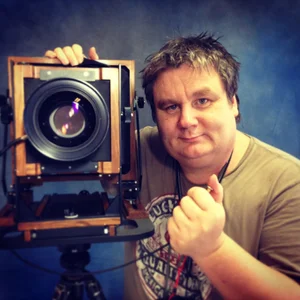
There are moments when time suddenly changes its scale.
Although Najin will never carry another calf, she still carries something just as precious. She remains one of the last living guardians of her species' memory. Should Northern White Rhino calves one day be born through science, they will still need teachers. They will still need to learn how to become Northern White Rhinos. Some inheritances cannot be frozen in liquid nitrogen. They can only be passed from one life to another.
Standing before Najin, I realized I wasn’t looking at an endangered animal.
I was standing before a monument to life itself.
Not a monument carved from marble or cast in bronze, but one that still breathed. One that carried the weight of millions of years within a single living body.
Until that moment, I had never fully understood what extinction meant.
Like most people, I knew the facts. I knew that the Northern White Rhino had been pushed to the edge of disappearance through poaching, war and the relentless demand for its horn. I knew that only two females remained alive. I knew that Sudan, the last male, had died in 2018. These were facts I had read many times before.
But knowledge and understanding are rarely the same thing.
Understanding arrived only when I stood a few metres away from Najin and looked into her eyes.
She was larger than I had imagined. Quiet. Gentle. Curious. Every fold in her skin spoke of a life lived slowly. She did not know she represented the end of a lineage. She simply existed, with the same dignity her ancestors must have carried while wandering across Africa long before the first human beings learned to write their own history.
In that moment, millions of years no longer felt abstract.
They became visible.
Life is not measured in centuries, but in millions of years.
And yet it can disappear within the span of a single human lifetime.
That sentence has stayed with me ever since.
It has become the quiet foundation beneath every photograph in Paradise Lost.
When I was first invited to photograph the last two Northern White Rhinos, my instinct was to book a flight immediately.
For any photographer, it seemed like an extraordinary opportunity.
Yet something made me hesitate.
I asked myself a question that refused to leave.
Why?
Why did I want to make this photograph?
If the answer was simply that only two animals remained, then I had no reason making it.
Rarity alone does not create meaning.
For fourteen months I stayed home.
The camera remained in the studio.
Instead, I thought.
Slowly, another question replaced the first.
How do you photograph extinction without photographing death?
The answer did not come all at once.
It emerged quietly.
I realized that I wasn’t interested in photographing what we have already lost.
I wanted to photograph what we are in danger of no longer seeing.
There is an important difference.
Loss asks us to grieve.
Wonder asks us to fall in love.
And I have come to believe that we protect only what we have first learned to love.
That thought became the beginning of Paradise Lost.
Not a project about endangered species.
Not a project about environmental catastrophe.
But a project about attention.
Because perhaps the greatest tragedy is not that nature is disappearing.
Perhaps it is that we have stopped truly seeing it.
When I finally arrived in Kenya, I wasn’t searching for drama.
I wasn’t interested in action or spectacle.
I wanted stillness.
The photograph I had imagined required patience rather than speed.
It required trust rather than control.
Nothing about it could have happened alone.
A close friend in Kenya embraced an idea that must initially have sounded rather improbable. Together with the remarkable team at Ol Pejeta Conservancy, he helped transform a sketch into something that could exist in the real world. Rangers, caretakers and all became part of the process.
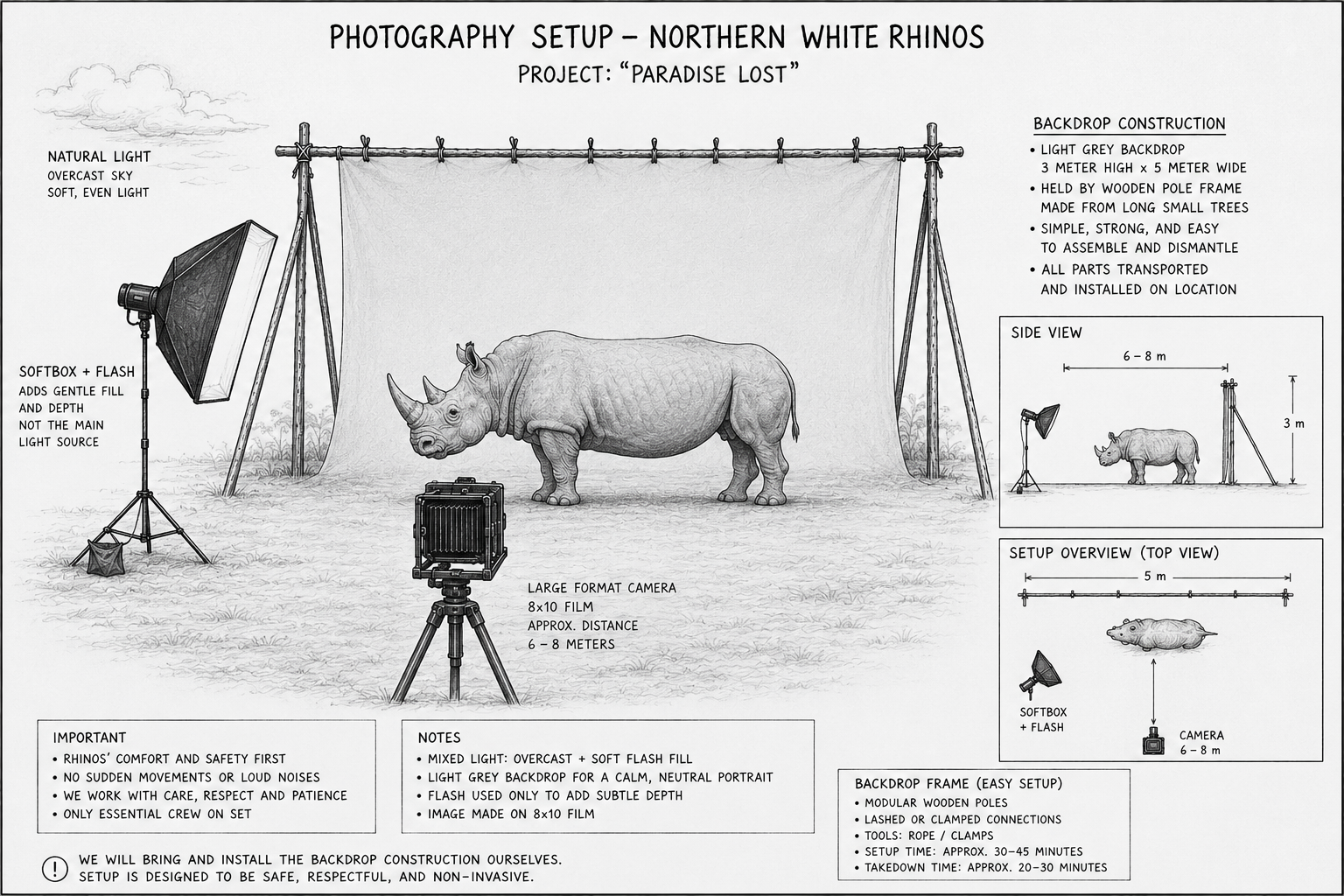
I knew I needed a sketch to explain the idea to everyone involved. When the rangers looked at it, they just shook their heads in disbelief. Only then did it truly sink in: drawing an idea on paper is one thing—turning it into reality, standing in front of a three-ton wild rhino with a five-meter backdrop, is something else entirely. I understood. (Sketch made with AI).
The backdrop that had already appeared in the first chapter of Paradise Lost travelled with me but this time in a much bigger size.
Simple.
Neutral.
Almost anonymous.
Its purpose was never to isolate the animal from its environment.
It was to remove everything that prevented us from seeing the animal itself.
One detail still seems symbolic.
We never moved Najin in front of the backdrop.
We moved the backdrop around Najin.
Everything adjusted to her.
Exactly as it should.
Before taking a single photograph, we spent time together.
There was no hurry.
We brought 40kg of carrots with us.
Najin and Fatu approached the vehicle.
They became accustomed to my scent, my voice and my presence.
Trust cannot be demanded.
It can only be offered time.
Over the following days we waited for clouds.
The East African sun is beautiful, but too harsh for the quiet portrait I was searching for. We built large diffusion screens, positioned lights with great restraint and waited, sometimes for hours, until the sky softened.
Photography often celebrates the decisive moment.
This photograph was built from countless patient ones.
The first time I touched Najin, I found myself unexpectedly overwhelmed.
Not because I had touched a famous animal.
Not because I had come close to extinction.
But because I suddenly understood the scale of what stood before me.
She belonged to a lineage that had survived ice ages, changing continents, predators and climates beyond human imagination.
Today, that entire history rests within two living animals.
How can something that required millions of years to become disappear almost silently within a single human lifetime?
That question has no easy answer.
Perhaps it never should.
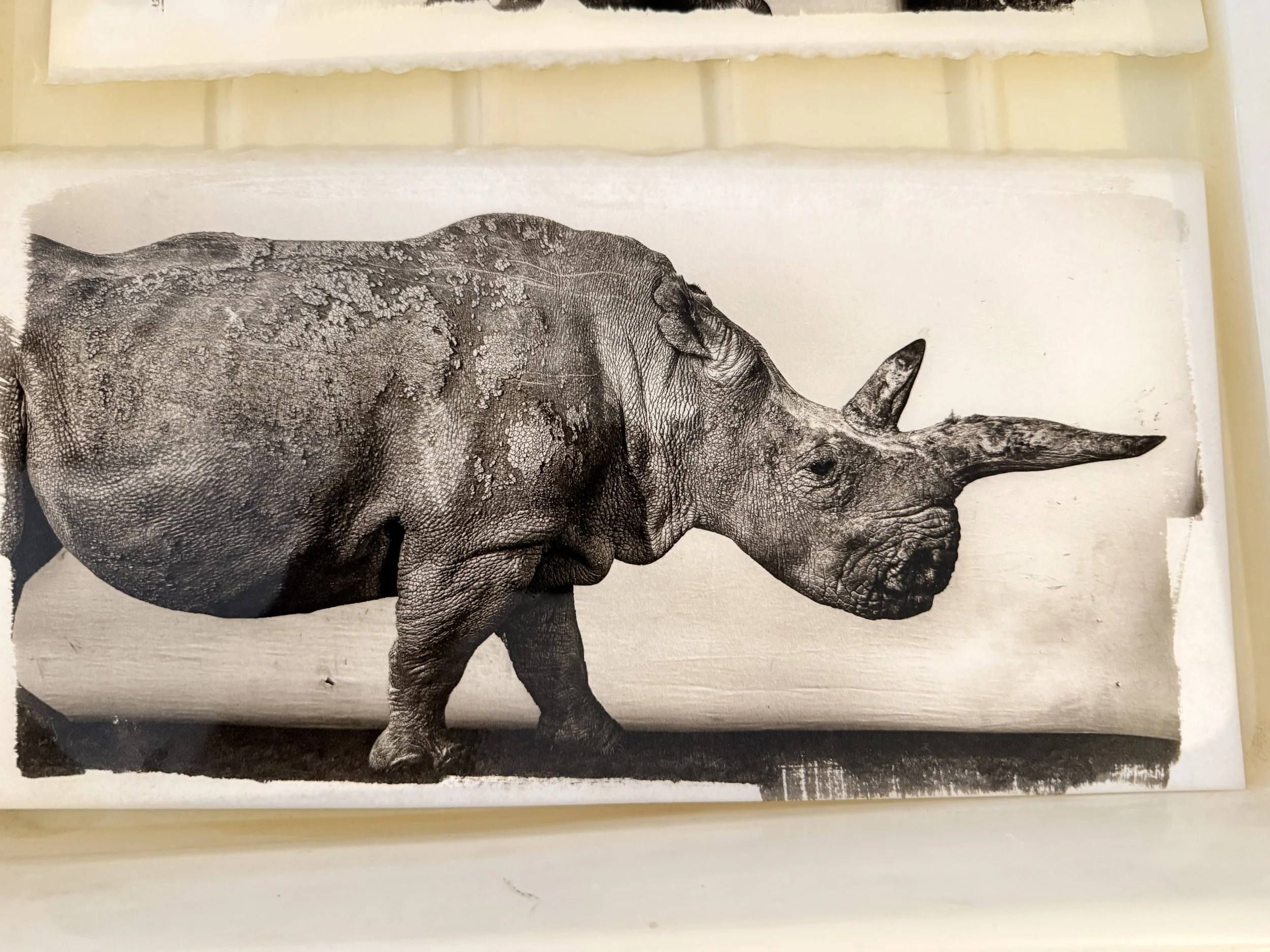
Seeing the first test print (Platinum Print) emerge in the darkroom was one of those unforgettable moments. It was then that I knew I had the photograph I had been searching for.
I have often wondered why human beings build monuments.
We build them to remember victories.
To honour lives.
To preserve history against the erosion of time.
Yet the greatest monuments on Earth were never built by us.
They built themselves.
Forests.
Coral reefs.
Ancient trees.
Migrating whales.
Insects.
Rhinos.
Each one the result of countless generations, each carrying an evolutionary story almost beyond comprehension.
Standing before Najin, I realised I was looking at one of those monuments.
Alive.
Fragile.
Irreplaceable.
Today, scientists are attempting something extraordinary.
Using preserved genetic material, advanced reproductive biology and Southern White Rhino surrogate mothers, they are trying to continue a story that humanity almost ended.
Tauwo the Southern White Rhino who “adopted” the younger Northern White Rhino Fatu. . The future of the Northern White Rhino now rests on the shoulders of its southern relative.
Whether they succeed remains uncertain.
What moves me most is not simply the science.
It is what the science represents.
Human beings are capable of unimaginable destruction.
We are also capable of extraordinary devotion.
Both truths exist at the same time.
The future of the Northern White Rhino now depends upon which of those truths proves stronger.
When visitors eventually stand before the finished platinum print, I hope they do not think first about extinction.
I hope they notice something much simpler.
The extraordinary presence of another living being. A monument of life itself.
The texture of her skin.
The quiet intelligence in her gaze.
The immense dignity of her posture.
Only afterwards do I hope they discover that she is one of the last two Northern White Rhinos on Earth.
Because by then, the relationship has already changed.
She is no longer a statistic.
She has become someone they have met.
Art cannot reverse extinction.
It cannot repair ecosystems.
It cannot undo history.
But perhaps art can still do something essential.
It can teach us to look.
And perhaps learning to look is where every act of care begins.
Standing before Najin, one thought has never left me.
She is not only one of the last witnesses of her own species.
She has become a witness to ours.
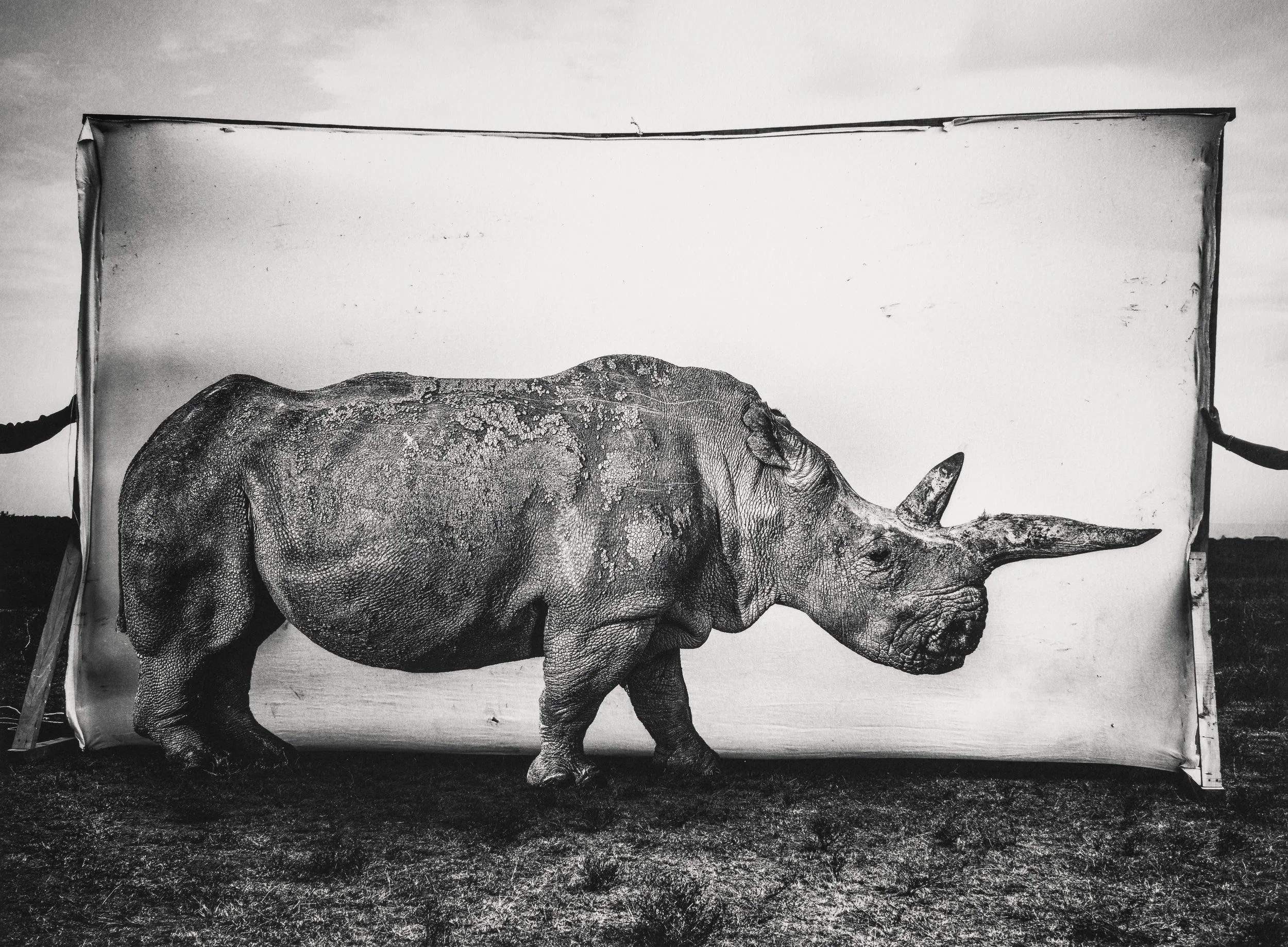
The handmade platinum prints lay before me. I spent hours looking at it, trying to understand what I was seeing—and why I had photographed Najin that way. But this is only a 40 × 50 cm print. From the very beginning, the vision had been to present her at life-size, allowing the viewer to stand face to face with Najin and experience the same sense of awe and overwhelming presence that I felt then—and still feel today.
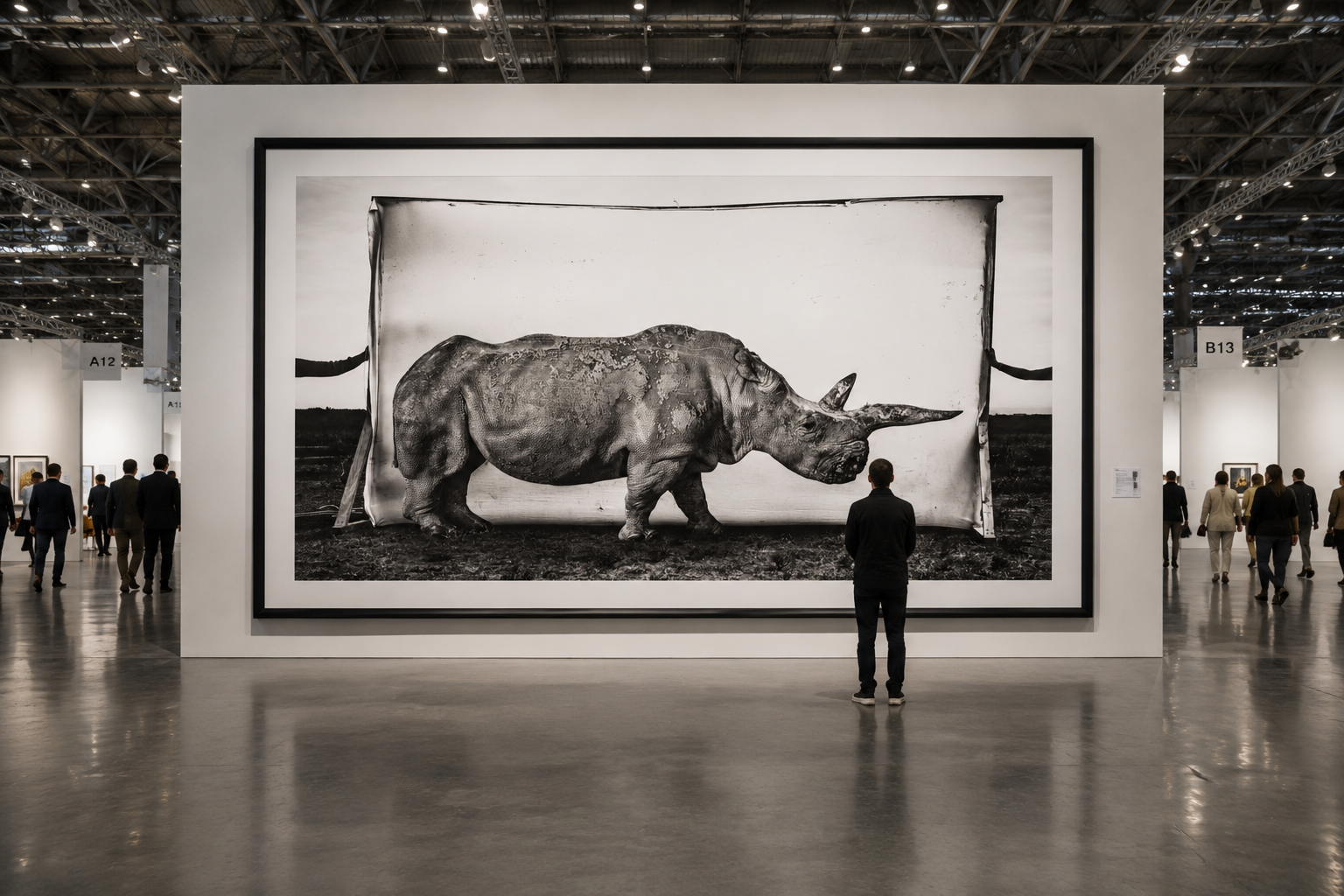
That is the vision. Life-Size Platinum Print. But that is another story that needs a miracle. It would be the biggest Platinum Print ever produced - almost 6 meter wide.
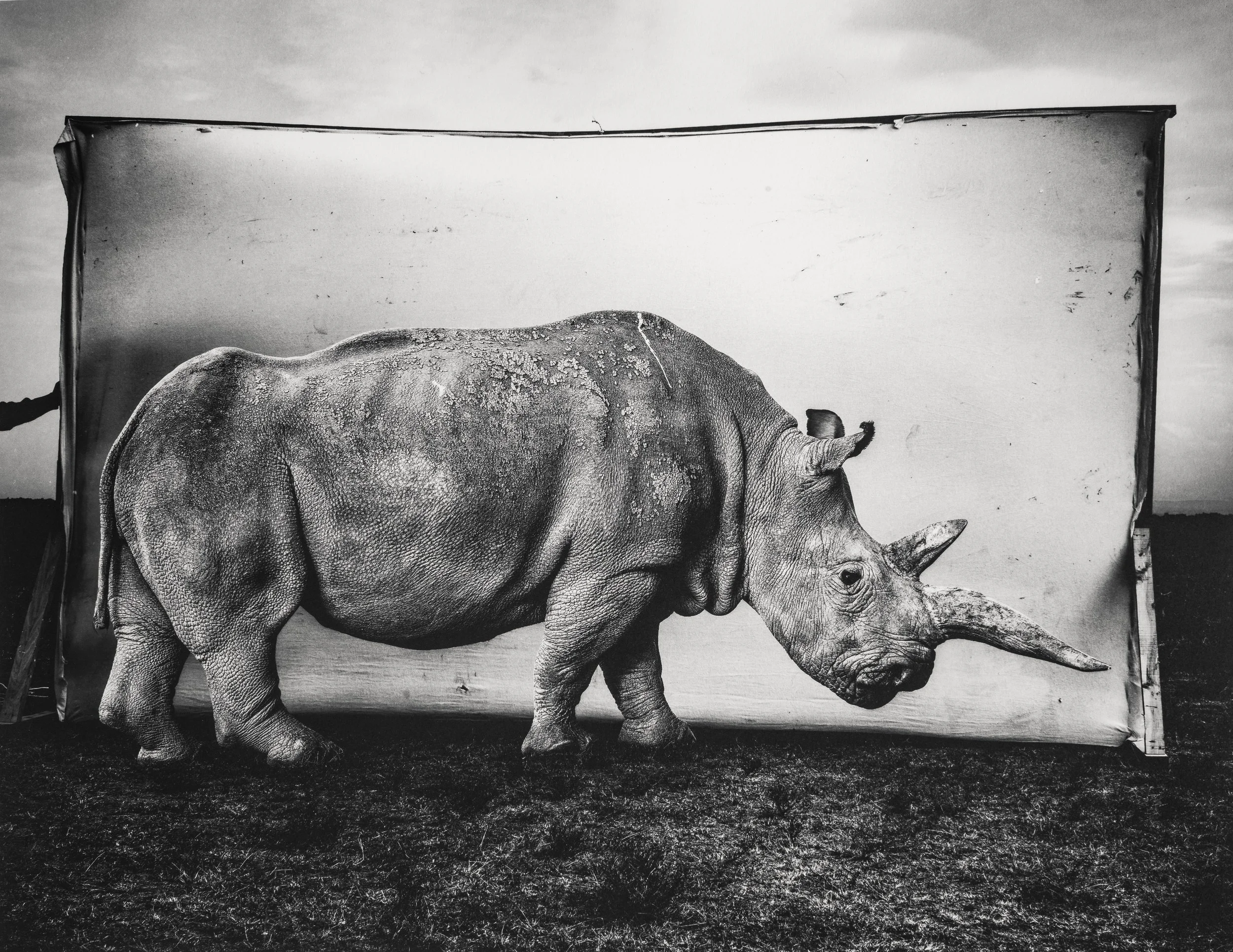
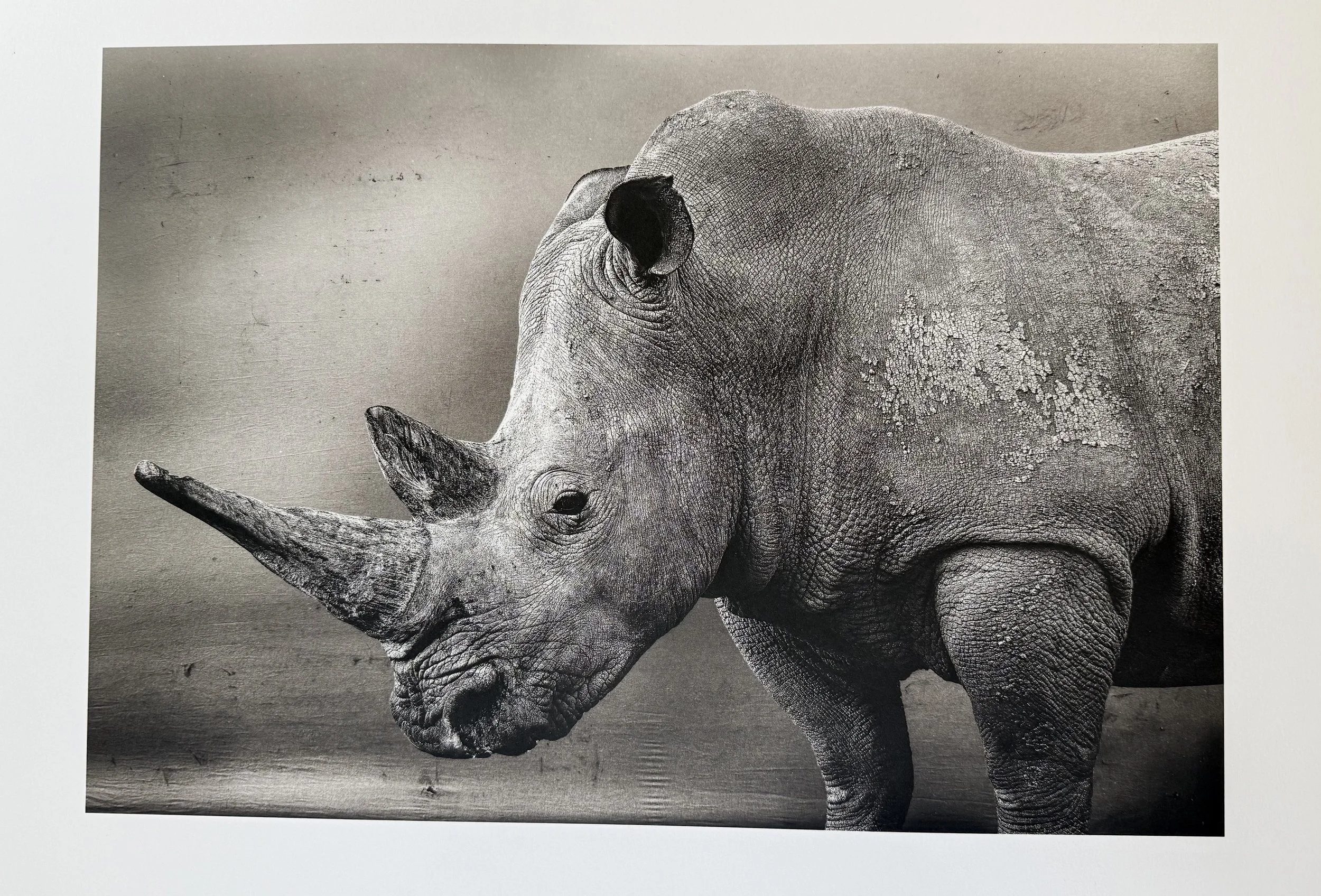
I liked this photograph very much, but Najin's lowered head made it feel like a familiar pose of a rhinoceros. I was searching for something more timeless—an image that would feel less like wildlife photography and more like a monument to life itself.
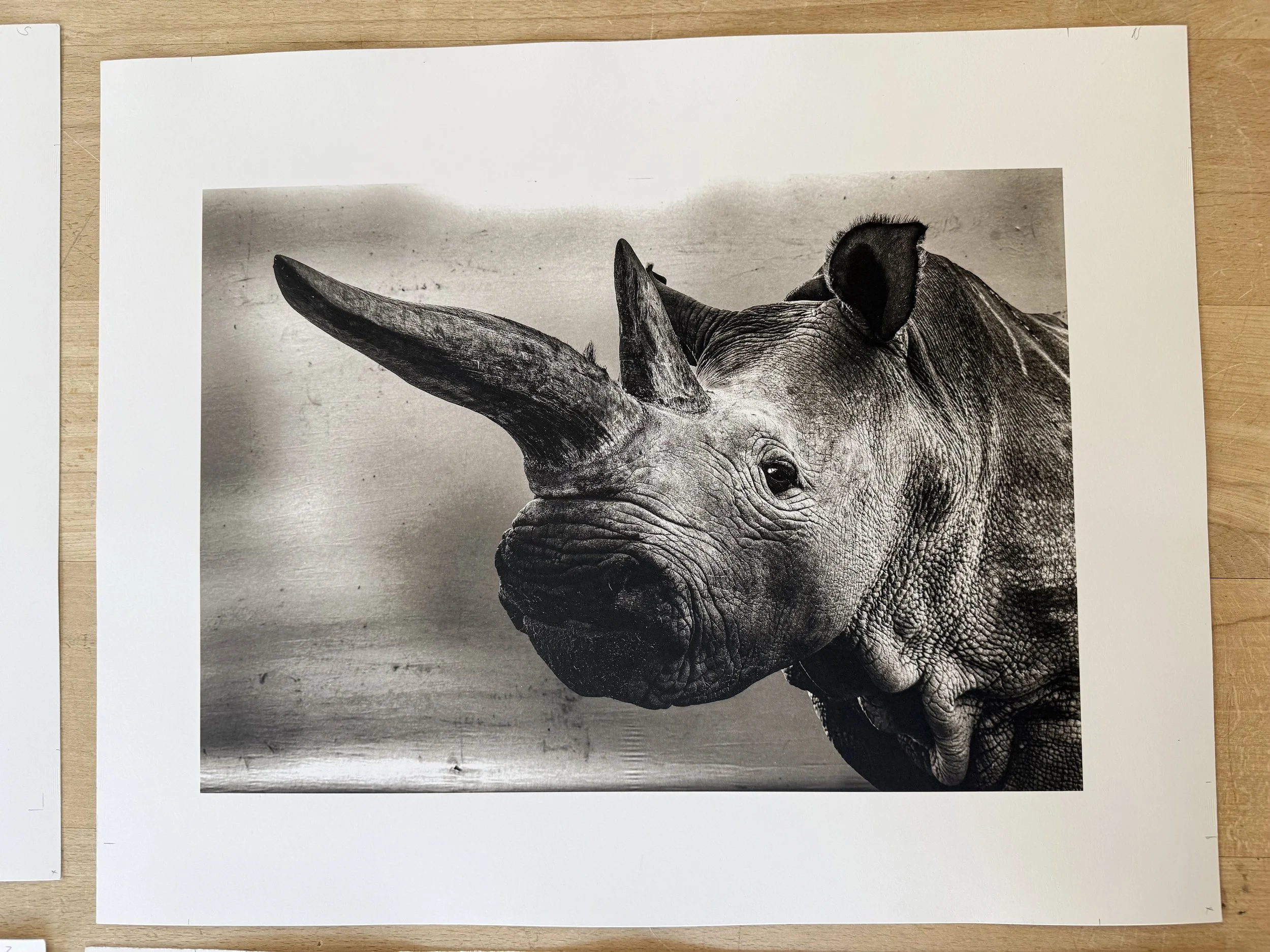
I knew while making this photograph that it would never become the central image of Paradise Lost. It was made for a different reason. Standing very close to Najin, I wanted to show her eye. It was there that the encounter became deeply personal. Perhaps this portrait will one day accompany the monumental photograph, reminding us that before Najin became a symbol of an entire species, she was an individual.