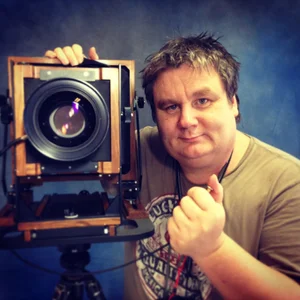
I spent my last birthday driving from Nuremberg to Turin.
I was on my way to the opening of one of my exhibitions.
It was probably not what most people imagine as a birthday celebration. I spent most of the day in my car, driving hundreds of kilometers through Germany, Austria, Switzerland and Italy.
But I remember being extremely happy.
I had time.
Time to think.
And somewhere along the road I began looking back at the year that had passed.
Birthdays have never been particularly important to me as celebrations. I don’t need a big party. Of course I appreciate when people remember me, but getting older has never frightened me very much.
What has become important to me is something else.
A birthday tells me that another year of my life has passed.
And I want to know what I did with it.
Not how many exhibitions I had.
Not how many photographs I made.
Not how much money I earned or how much recognition I received.
I want to know whether I developed.
Every birthday gives me a very simple point of comparison:
Who was I one year ago, and who am I today?
There are certain things I look at.
Imagination.
Can I imagine things today that I could not have imagined a year ago?
Curiosity.
Am I still genuinely curious? Do I still want to understand things I know nothing about? Do I still enter situations without knowing what I will find?
Risk.
Am I still willing to do something without knowing whether it will work? Am I willing to fail or even willing to be hurt ? Or have I slowly begun protecting what I already have?
Seeing.
Have I become better at seeing what is actually in front of me instead of seeing only what I expected or wanted to see?
Truthfulness.
Is the work becoming more genuinely mine? Or am I beginning to respond to what other people expect from me—to galleries, collectors, audiences, success, or even to my own previous work?
Relevance.
Does my work connect more deeply to something beyond myself? Does it say something about the time in which I live?
And there is another one that has become increasingly important to me.
Love.
Did I love better than I did a year ago?
Did I understand love better?
Did I become better at giving it without trying to control what comes back?
Did I become more capable of seeing another person as they are, rather than as I want or need them to be?
We often speak about love as if we either have it or we don’t.
I don’t think that is true.
I think love is something we can learn.
We can become better at it.
And if I have developed as an artist but have not developed in my ability to love, I would have difficulty calling that development.
And then there is perhaps the most uncomfortable question:
Where have I become comfortable?
Because comfort is complicated.
Something can begin with enormous courage and slowly become routine.
Something that once required discovery can become a method.
We can become extremely good at doing what we already know how to do.
And from the outside this can look like development.
We become more experienced. More efficient. Perhaps more successful.
But perhaps we are simply becoming better at repeating ourselves.
That frightens me more than failure.
Because failure at least means that I attempted something whose outcome I didn’t already know.
Somewhere on that road to Turin, I asked myself these questions.
And I realized that I was happy.
Not because everything had worked.
It hadn’t.
But I could see movement.
I had taken risks.
I had followed ideas without knowing where they would lead.
I had gone into situations I couldn’t completely control.
I had failed.
I had changed things.
I had let things go.
I had learned.
I had loved.
And I felt that my work had become stronger and more relevant.
The person sitting in that car was not quite the same person who had been there one year earlier.
For me, that is something worth celebrating.
WHAT ARE WE REALLY AFRAID OF?
I see many people who become uncomfortable with their birthdays.
Especially somewhere in their thirties, birthdays seem to change.
When we are children, we can hardly wait for them. Later, people begin to joke about not wanting to celebrate anymore, not wanting to say their age, not wanting to become older.
We usually assume it is about aging.
Perhaps it is.
But I sometimes wonder whether there is something else.
What if part of what makes birthdays uncomfortable is not that we are getting older, but that they confront us with the fact that another year has passed?
A birthday creates a line.
Here I was one year ago.
Here I am today.
What happened between those two points?
What did I want to change?
What did I say I would finally do?
What mattered to me?
What did I dream about?
And did I do it?
Or am I standing in essentially the same place, telling myself essentially the same things?
Next year.
When I have more time.
When I have enough money.
When the children are older.
When work becomes easier.
When I retire.
Later.
I know this because postponement used to be a habit of mine.
And postponement is dangerous precisely because it doesn’t feel like giving up.
We don’t say:
I will never do this.
We say:
I will do it later.
That allows us to keep the dream without taking the risk.
We can continue believing in the person we might become without having to stop being the person we already are.
And perhaps underneath much of this is fear.
Fear is powerful.
But it doesn’t always arrive looking like fear.
Sometimes it sounds remarkably reasonable.
Be realistic.
Don’t rush.
Wait a little longer.
Make sure everything is secure first.
Don’t change too much at once.
And sometimes those are exactly the right things to do.
But sometimes they aren’t wisdom.
Sometimes it is fear that has learned how to sound reasonable.
And the difficult part is that nobody outside us can make that distinction for us.
Only we know.
Fear itself is not the enemy.
We need fear. It protects us. It warns us. Sometimes it prevents us from doing something genuinely foolish.
But fear has another ability.
Fear can make a life smaller.
Slowly.
Almost without us noticing.
It can determine which ideas we follow and which we abandon.
Which conversations we have.
Whom and how we love.
Which risks we take.
What we create.
And what we allow ourselves to become.
Perhaps one of the great challenges of being alive is learning to listen to fear without giving it the authority to lead us.
Because if fear makes too many of our decisions, we can eventually create a life that is safe enough to preserve, but too small to fully live.
I believe there is a life each of us is capable of living.
A life that asks something of us.
Curiosity.
Trust.
Courage.
Love.
Risk.
And perhaps fear is one of the forces that can most limit our ability to live fully the life we were born for.
Not because we stop living.
But because we slowly begin choosing only what we can control.
THE CHANGE WE CAN CONTROL
I see this particularly often among artists.
We know something needs to change.
Perhaps the work no longer excites us.
Perhaps we have begun repeating ourselves.
Perhaps we already know there is another direction we want to explore.
But real change is frightening.
Because real change means we cannot completely control what comes afterward.
So we make small changes.
A different format.
A different technique.
A new subject.
We move slightly outside what we already know.
Just far enough to feel that something is happening, but not far enough to really threaten what we already have.
And there is nothing inherently wrong with incremental change.
Some of the deepest development happens slowly.
But I think we have to be truthful with ourselves about why we are changing slowly.
Is it because the work genuinely needs time?
Or because this is the amount of change our fear still allows us to control?
There is a huge difference.
Sometimes small changes don’t transform our lives.
They simply make the life we don’t really want a little more bearable.
And I don’t think making life more bearable should be the goal.
Not when we already know that something fundamental needs to change.
We can spend years improving a situation we should have left behind.
We can renovate one room after another in a house we no longer want to live in.
And with every improvement it becomes a little easier to stay.
Perhaps that is exactly the trap.
Because the longer we stay, the better we become at living with a situation we once wanted to change.
We adapt.
We find solutions to the small problems.
We change something here and something there.
We explain to ourselves why things simply cannot be different right now.
We lower our expectations.
We learn how to work around what is wrong.
And slowly something that once felt unacceptable becomes familiar.
Human beings have an extraordinary ability to adapt.
It helps us survive.
But there is also a danger in it.
What becomes more bearable does not necessarily become more right.
Sometimes we are not learning to live better.
We are simply learning to live better with what we once wanted to change.
And the longer we do that, the more solid everything around us becomes.
Habits form.
Dependencies form.
Responsibilities accumulate.
Securities become harder to give up.
We arrange our lives around the situation.
We build structures that keep us inside it.
And eventually the change that once seemed possible can begin to look enormous.
Perhaps the same thing happens with fear.
Every time we submit to it, it doesn’t necessarily become smaller.
Sometimes it becomes stronger.
It gains more room.
More arguments.
More authority over our decisions.
What began as a fear can eventually become a belief:
I can’t do that.
It’s too late now.
It would be too dangerous.
This is simply my life.
And after a while, perhaps we don’t even question it anymore.
The fear becomes more solid—and with it, the life we were afraid to change.
That is why I don’t think postponement is neutral.
We tell ourselves that we haven’t decided yet.
But while we wait, every day we make a small decision for things to remain as they are.
And perhaps that is one of the quietest ways years disappear.
THE TWO RISKS
Whenever we think about major change, we naturally calculate risk.
What if it doesn’t work?
What if I fail?
What if I lose money?
What if people don’t understand?
What if I leave something secure and discover that the new thing doesn’t work?
What if I regret it?
These are legitimate questions.
But there is another question we ask much less often:
What do I risk if I don’t change?
What happens if I stay?
What happens if I postpone this for another year?
Five years?
Ten?
What happens to my curiosity?
What happens to my courage?
What happens to the work I never make?
To the love I never give?
To the person I might have become?
The risk of changing is easy to see.
It is directly in front of us.
The risk of remaining is much quieter.
Nothing dramatic has to happen.
We wake up.
We work.
We pay our bills.
We do what we know how to do.
Life functions.
And another year passes.
That is what makes the risk of remaining so dangerous.
We often don’t recognize the cost of staying until the time has already been spent.
We spend enormous amounts of energy calculating what change might cost us.
Perhaps we should spend just as much time considering what remaining will cost us.
Because staying is also a decision.
Doing nothing is also a decision.
Postponing is also a decision.
They simply don’t feel like decisions because nothing changes today.
But eventually something happens that none of us can prevent.
We get older.
Time passes.
Possibilities change.
Some disappear.
People disappear from our lives.
Our bodies change.
Our strength changes.
The world changes.
And eventually something painful can happen.
We have adapted for so long, waited for so long, said later so many times, that one day we look back and realize what we missed.
Perhaps by then we really are too old for certain things.
Perhaps the person we wanted to say something to is no longer there.
Perhaps an opportunity has disappeared.
Perhaps our body can no longer do what it once could.
Or perhaps we have moved so far away from the person who once had that dream that we can hardly remember why it mattered so much to us.
And eventually every life ends.
Then there is no later.
Perhaps this is the real tragedy of postponement:
We often understand what we missed only when we can no longer go back and live it.
Then we don’t only see the life we lived.
For a moment, perhaps we also see the life that might have been possible.
The work we didn’t make.
The places we didn’t go.
The words we didn’t say.
The love we didn’t give.
The decisions we didn’t make.
The person we might have become.
Not because all of it was impossible.
But sometimes simply because we were afraid for too long.
Perhaps the worst thing is not that one day we die.
Perhaps it is that we stop truly living our own life long before we die.
WHEN MY LIFE CHANGED
I learned something about this around twelve years ago.
At the time, I was in a leadership position in an international Christian missionary organization. Photography had already become an increasingly important part of my life.
Eventually I was asked to choose:
Either the leadership work in the missionary organization or photography.
I had to decide.
And I chose photography.
Looking back today, I am very glad that I did.
But at the time, I had no idea where that decision would lead.
I wasn’t simply leaving a job.
Much of my life had been built around that work.
My income was connected to it.
My social world was connected to it.
Many of my friendships were connected to it.
My daily structure, my responsibilities, much of what had defined my life—all of it was connected.
Choosing photography meant letting much of that go.
And there was nothing waiting on the other side that could guarantee I had made the right decision.
I didn’t know whether I would succeed as an artist.
I didn’t know whether galleries would represent me.
I didn’t know whether collectors would buy my photographs.
I didn’t know whether I would ever be able to make a living from it.
I couldn’t calculate the outcome.
There was risk.
And somehow there was trust.
So I chose it anyway.
The risk of choosing photography was easy for me to see.
What I understood much less clearly at the time was the other risk:
What would happen if I didn’t choose it?
What would happen to the work I wanted to make?
What would happen to my ideas?
And what would happen to the person I might have become?
Would I look back ten or twenty years later and realize that I had allowed fear to make one of the most important decisions of my life?
I will never know.
And I am glad I don’t have to know.
Once I had made the decision, another question appeared.
If I had to rebuild so much of my life anyway, why rebuild the same life?
Why not ask:
How do I actually want to live?
I began to see the rupture not only as a loss, but also as an opportunity for deep change.
Not a slightly adjusted version of what had existed before.
Something different.
Looking back, I realize that one of the deepest changes of my life became possible because I was willing to let go of something.
Not responsibility.
Not discipline.
Not hard work.
Certainty.
I didn’t need to know where it would lead.
I only needed to know that I wanted to take that path.
That distinction has stayed with me ever since.
Trust is not knowing that something will work.
If I know it will work, I don’t need trust.
Trust begins where certainty ends.
DIE EMPTY
Recently I came across Derek Sivers’ book How to Live: 27 Conflicting Answers and One Weird Conclusion.
One of its chapters is called “Die Empty.”
Those two words stayed with me.
Don’t die carrying inside you what you could have given.
Make the work.
Give what you have to give.
Don’t spend your life waiting to live your life.
I recognized something in those words.
Not because the thought was completely new to me, but because it described something I had been learning for years.
An idea inside my head is safe.
It cannot fail there.
Nobody can reject it.
It costs nothing.
It threatens nothing.
And it can remain beautiful because reality has never had the opportunity to contradict it.
But it also cannot become anything.
At some point an idea has to leave the safety of imagination and collide with reality.
And reality changes it.
That is true in my photography all the time.
Things go wrong.
People say no.
Weather changes.
Materials fail.
Animals don’t behave as I imagined.
Sometimes the photograph I had in my head simply doesn’t exist in reality.
And I have learned something from that.
If I keep trying to control everything, I may eventually be able to force reality into something that resembles my original idea.
But in doing so, I may miss the possibility of discovering something better.
So I have learned to arrive with imagination and then look.
Imagination brings me to the photograph. Seeing lets it become more.
Perhaps life isn’t so different.
We need imagination to see that another possibility exists.
We need courage to move toward it.
But eventually we have to give up the demand to know exactly where it will take us.
That is what “Die Empty” means to me.
Not:
Produce as much as possible.
Not:
Work until there is nothing left of you.
Quite the opposite.
It means:
Don’t protect your unrealized life until there is no time left to live it.
Don’t carry your unwritten book to the grave.
Don’t carry your unmade photographs.
Don’t carry the words you were too frightened to say.
Don’t carry the love you were too frightened to give.
Don’t carry the journey you always intended to take.
Don’t carry the person you always intended to become.
At some point, later has to become now.
At some point, the work has to be made.
At some point, the conversation has to happen.
At some point, the decision has to be taken.
At some point, we have to accept the risk of changing.
Because refusing that risk does not leave us without risk.
It simply chooses another one.
There is the risk of changing.
And there is the risk of remaining.
One may cost us security.
The other may cost us years.
And years are the one thing we cannot earn back.
Perhaps that is why those two words affect me so much.
Die empty.
Not exhausted.
Not burned out.
But empty of what you could have given.
Of what you could have tried.
Of the love you could have given.
Of the life you could have lived.
Because eventually there really is no later.
BUT GIVING IS NOT ENOUGH
And still, something was missing for me in the idea of dying empty.
I don’t only want to empty myself.
I want to keep becoming someone who has more to give.
Because production is not development.
I could spend the rest of my life making variations of things I already know how to make.
Perhaps I could become extremely good at it.
Perhaps I could even become more successful.
But success can become another form of protection.
Once something works, there are powerful reasons to continue doing it.
People recognize it.
Collectors want it.
Galleries know how to sell it.
And suddenly changing becomes more expensive.
Now there is something to lose.
This is where I need my birthday questions again.
Did I develop?
Did I love better?
What am I still postponing?
What have I become accustomed to even though I once wanted to change it?
And perhaps the most difficult one:
What am I protecting because I am afraid of what would happen if I really changed?
Those questions are becoming increasingly connected for me.
Because development requires change.
Real change contains uncertainty.
Uncertainty awakens fear.
And fear makes us want control.
So perhaps the question isn’t whether I am afraid.
Of course I am sometimes afraid.
Courage is not the absence of fear.
The question is:
How much authority am I willing to give my fear over the direction of my life?
DIE EMPTY, BUT DON’T BECOME EMPTY
And this brings me to a contradiction I like very much.
Die empty, but don’t become empty.
Give what you have.
Don’t hoard your ideas.
Don’t postpone the things that matter until some imaginary future when everything will finally be safe.
But keep filling yourself again.
With curiosity.
With questions.
With experiences.
With people.
With things you don’t understand.
With failure.
With uncertainty.
With beauty.
With love.
With wonder.
Go somewhere you haven’t been.
Learn something you don’t need to learn.
Look longer.
Love better.
Question what you think you already know.
Risk discovering that you were wrong.
Allow the work to change you.
Allow people to change you.
Allow life to change you.
Then give again.
Perhaps that is the cycle:
Live.
Discover.
Imagine.
Love.
Risk.
Make.
Give.
Change.
Begin again.
And perhaps this is why birthdays have become meaningful to me.
They give me a moment to interrupt the cycle and look at it.
Not:
How old am I now?
But:
Did I develop?
Did I love better?
What am I still postponing?
What have I become accustomed to even though I once wanted to change it?
What am I protecting because I am afraid of what would happen if I really changed?
There will be years when the answers are difficult.
Life is not completely ours to control.
There is illness.
There is grief.
There are responsibilities.
There are people who need us.
Sometimes simply making it through a difficult year is already an achievement.
This isn’t about judging someone else’s life.
It is about being truthful with our own.
Only I know whether I am waiting because I need to wait or because I am afraid.
Only I know whether the small changes I am making represent genuine development or whether they simply make it easier to remain somewhere I no longer want to be.
Only I know what I have become accustomed to even though it once felt wrong.
Only I know what I have been promising myself for years that I will do someday.
Only I know what I am afraid to lose.
And only I know what that fear is costing me.
So perhaps we shouldn’t be afraid of birthdays.
Perhaps we should use them.
Once a year, stop.
Look back.
Meet the person you were twelve months ago.
And ask whether you are becoming the person you are capable of becoming.
Because another year will pass.
Either way.
And eventually years become decades.
There is risk in changing.
But there is also risk in remaining.
Perhaps an even greater one, because for so long we don’t see it.
We can become accustomed to almost anything.
We can learn to live with a life we once wanted to change.
We can make it a little more comfortable.
A little safer.
A little more bearable.
And perhaps eventually we don’t even notice how much smaller it has become.
Until one day we look back.
And then it may be too late.
Too late for certain decisions.
Too late for certain journeys.
Too late for certain people.
Too late for certain dreams.
Too late to live certain years differently.
Perhaps the worst thing is not that one day we die.
Perhaps it is that we stop truly living our own life long before we die.
That is why I want to keep reminding myself:
Give what you have to give.
Love better.
Change what needs to be changed.
Don’t become accustomed to a life you know you need to change.
Stay curious enough to become full again.
And don’t give fear the authority to decide the life you were born to live.