Since my father died last May, I keep thinking about what remains.
I realized, death makes certain things very clear.
We take nothing with us.
My father continues in his children. I am one of six. He continues in our memories, in what he gave us, and probably in ways we do not even recognize.
But as an artist, I keep returning to another question:
Why do we make art?
What astonishes me is that something experienced by one human being can reach another long after the person who experienced it is gone.
Van Gogh could not have known that, more than a century after his death, people would still stand before his paintings.
Emily Dickinson could not have known what her poems would become.
Modigliani could not have known.
Kafka even asked for his manuscripts to be destroyed.
And yet, here we are.
Something traveled.
Something that existed inside one human being was given a form strong enough to survive the life that created it.
I don’t think we can aim for that.
We cannot decide to make something that will matter in a hundred years. We cannot decide that our work will become part of culture, or that someone who has not yet been born will one day stand before it and feel something.
That belongs to the future.
Our responsibility is now.
And increasingly, I think that responsibility begins much earlier than with the work we make.
It begins with the life we choose to live.
We are surrounded by examples of how a life is supposed to look. What success looks like. What happiness looks like. What an artist should make. What receives attention. What sells. What gets exhibited.
It is incredibly easy to begin copying without realizing that we are copying.
Not only other people’s work.
Other people’s lives.
We adopt their ambitions. Their definitions of success. Their desires. Even their ideas of what is worth wanting.
And somewhere along the way, we can become very successful at living a life that was never really ours.
I think this may be one of the great dangers of our time.
We have never been able to see so much of other people’s lives. Every day we are surrounded by carefully constructed versions of who people want us to believe they are.
And inevitably, we compare.
We imitate.
We adjust.
But it goes deeper than that.
We become, to a surprising degree, the people we surround ourselves with.
Not because they force us to become like them, but because we want to belong. We want to be understood. We want to fulfill expectations. And slowly, often without noticing, we begin shaping ourselves accordingly.
We listen to advice.
We listen to opinions.
We listen when someone tells us something is unrealistic, too difficult, too risky, or simply impossible.
And perhaps some of the most limiting advice is given with the best intentions.
Because every piece of advice comes from the boundaries of another person’s life. From what they have experienced. What they believe is possible. What they fear. What they would or would not risk.
But their boundaries do not necessarily have to become mine.
If I am not careful, I can spend my life making myself understandable to the people around me.
I can reduce a dream until it becomes reasonable.
I can exchange curiosity for certainty.
I can choose the path that receives approval rather than the one that keeps asking something of me.
And one day I may discover that I have built a perfectly acceptable life—
but someone else could have lived it.
Perhaps this is part of our responsibility while we are alive:
To discover what is actually ours.
Not to reject other people. Not to stop listening. Not to believe that every outside opinion is wrong. Other people can see what we cannot see. Criticism can be invaluable.
But there is a profound difference between listening to others and handing them authorship of our lives.
Nobody else can tell us the dimensions of the life we are capable of living.
That remains our responsibility.
And perhaps this is particularly important for an artist.
Because if I allow other people to define the boundaries of my life, sooner or later they will also define the boundaries of my work.
I see how easily this happens in art.
We look at what already works. What receives attention. What sells. What gets exhibited. We see something successful and begin moving toward it.
Slowly, searching becomes repeating.
Discovery becomes performance.
But I don’t believe meaningful art begins there.
I think it begins with curiosity.
With something private—a question, a feeling, an experience, perhaps something we do not yet understand—and the attempt to give it form.
Not because we already know the answer.
Because we don’t.
That requires truthfulness.
It means resisting the temptation to bend what we see toward what we believe others want to see.
It means being willing to follow a question even when we don’t know where it will take us.
And there can be a price for that.
Not because suffering creates great art. I don’t believe that.
But because truthfulness can mean uncertainty. It can mean rejection. It can mean standing apart. It can mean continuing when there is no evidence that what you are doing will ever matter to anyone but yourself.
Becoming yourself inevitably means letting go of some of the lives you could have copied.
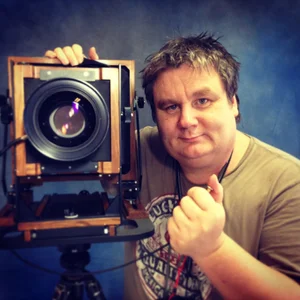
I am learning some of this through Paradise Lost.
Again and again, I enter without certainty.
I may begin with an idea, but then reality changes it.
I have to watch. I have to listen. I have to let go of what I thought the photograph should become and remain open to what is actually there.
And increasingly, I understand that uncertainty is not the obstacle.
It is where discovery begins.
Perhaps this is not only a way of making art.
Perhaps it is also a way of living.
Not performing a life, but actually living one.
Paying attention.
Remaining curious.
Questioning what we have inherited and what we have merely copied.
Having the courage to discover what is true for us rather than repeating what has already been accepted by others.
And asking ourselves, again and again:
Is this actually my life?
Is this what I believe?
Is this what I see?
Or am I simply repeating something I have seen somewhere else?
Perhaps that is where life and art finally become inseparable.
The work is not something separate that I manufacture and send into the world.
It comes out of the way I have lived.
What I have paid attention to.
What I have questioned.
What I have loved.
What I have been frightened by.
What I have been willing to risk.
What I have discovered.
The work can only carry what the life has first contained.
And perhaps that is why we cannot manufacture something that will transcend our lifetime.
We can only live deeply enough, look closely enough, and work truthfully enough that there is something worth carrying forward.
After that, we have to let it go.
I cannot choose what lasts.
I cannot know whether anything I make will matter after I am gone.
That is not my responsibility.
My responsibility is the life I am living now.
To make it my own.
To remain curious.
To keep looking.
To have the courage not to reduce it to the expectations of others.
And to give whatever I discover the strongest and most truthful form I can.
Then I think again of Van Gogh.
Of Dickinson.
Of Modigliani.
Of Kafka.
Their lives ended.
But something they saw, something they felt, something they discovered did not.
It crossed the boundary of their own lifetime and entered ours.
They could not have planned it.
They could not have known.
Perhaps that is precisely the point.
They lived.
They searched.
They made.
And then they had to let go.
What happened afterward no longer belonged to them.
And sometimes, something remains.